
What is hardscaping, and how do pavers fit into a backyard design?
Hardscaping is every built, non-living element of a yard: patios, walkways, pool decks, steps, seating walls, and borders. Pavers, stamped concrete, natural stone, and cool-deck coatings are the main surface choices, and the right one depends on heat, drainage, how easily the surface can be repaired, and the look you want around your pool and home.
In Southern California, the surface matters more than many homeowners expect. Strong sun, dry summers, occasional heavy rain, and the soils found across Los Angeles and the San Fernando Valley all influence how a patio or pool deck performs over time. A surface that looks great on installation day but runs hot, holds water, or settles unevenly becomes a daily annoyance.
Overview
This article is for homeowners planning a new outdoor living area or rebuilding a worn pool deck or patio. It compares the common materials, explains why base preparation and drainage decide how long a surface lasts, and shows how to lay out patios, walkways, and seating areas and connect them to a pool. You will finish knowing which questions to ask before choosing a material.
Plan Hardscape as One System
Patios, walkways, steps, and decks are easiest to get right when they are designed together instead of added one at a time. A single plan lets you decide where water will drain, where people will walk, and how materials and colors repeat from the back door to the pool edge.
Start with how you want to use the yard. Dining, lounging, a path to a side gate, and space around the water each need a different amount of room. GWP Builders’ custom pool design process begins the same way, with the property, the sightlines, and how you want to spend time outside.
Comparing Hardscape Materials
No single material wins in every category. This qualitative comparison draws on general industry knowledge and GWP Builders’ description of its deck options.
| Material | Heat comfort | Repairability | Look | Budget feel |
|---|---|---|---|---|
| Interlocking pavers | Depends on color and finish; lighter tones stay cooler | Individual pavers can be lifted and reset | Premium, with many colors, shapes, and patterns | Mid to higher |
| Stamped concrete | Standard concrete can absorb heat; color and sealer matter | Cracks and settled slabs usually need patching or resurfacing | Can imitate stone or brick in a continuous surface | Often more budget-friendly |
| Natural stone | Varies by stone type and color | Pieces can be reset, though matching stone can take effort | Distinctive, high-end, and natural | Higher |
| Cool-deck coatings | Designed to reduce heat underfoot | Applied over sound concrete; renewed by recoating | Smooth, consistent, wide color range | Often more budget-friendly |
Treat this as a starting point. Dark materials absorb more heat, and the final feel depends on color, texture, and shade.
Pool Deck Pavers: What Makes Them Work
A pool deck takes more abuse than a patio. It gets wet, hot, and walked on barefoot, and it often has coping, equipment, and a spa nearby. Pavers suit this setting, though the details still matter.
Heat Comfort Underfoot
Surface color and reflectivity strongly influence how hot a surface gets. The U.S. Environmental Protection Agency notes in its guidance on cool pavements and heat islands that conventional paving such as asphalt can reach surface temperatures of up to 152°F at mid-day, while cool pavements stayed 10 to 16°F cooler because they reflect more solar energy or are otherwise modified to stay cooler. That research covers pavements in general, not pool decks specifically, but the principle carries over: a lighter, more reflective surface is usually more comfortable on bare feet in a Southern California summer. For more on heat-friendly decking, see GWP’s post on cooling pool deck materials for the SoCal heat.
Slip Resistance
Wet feet and smooth surfaces don’t mix well. Ask about the texture of any paver, stone, or coating, and judge how it feels when wet, not only dry. Stairs, coping edges, and transitions near the water deserve the most attention.
Repairs Over the Years
A practical strength of pavers is that a section can be lifted, the base corrected, and the same pavers reset. GWP Builders’ pool deck page describes pavers as offering easy repair and a premium look, and notes that concrete and cool-deck coatings can be more budget-friendly. For a rebuild, its pool decks and hardscaping service covers resurfacing, pavers and stone, crack and drainage repair, and coping coordination, with the deck and the pool edge designed together.
Base Preparation and Drainage Come First
The visible surface gets the attention, but the base underneath decides whether it stays flat. A paver patio needs compacted layers beneath it, and pool decks and patios alike need a surface sloped so water runs away from the pool and the house. Settling, sunken corners, and standing water are usually base and drainage problems, not surface problems.
Drainage can also work with the surface. The EPA explains in its overview of permeable pavement that these surfaces let rain seep through to layers of soil and gravel below, which helps reduce runoff, and it lists interlocking pavers among the types. A permeable design is a specific build, not something every paver patio automatically has, and it needs to suit your soil and your property. If you’re near a pool or a foundation, ask a licensed professional how to manage water.
Excavation is the other early step. Before any digging for a patio base, footings, or a pool, call 811. 811 California describes it as the free national before-you-dig service, and in California the notice must be given at least two working days before the dig (not counting the day of notification) and no more than 14 calendar days before it. Underground Service Alert of Southern California serves Los Angeles County. Confirm that whoever digs has made the request.
Designing Patios, Walkways, and Seating Areas
Patio Design and Outdoor Zones
Think in zones rather than one large slab. A dining area needs room for chairs to pull out, and a lounge area needs a clear path around the loungers. A change in pattern, a border of contrasting pavers, or a low wall can separate zones without crowding the yard.
Walkways
A walkway should be wide enough for two people to pass, gently graded so water does not collect, and finished with a slip-resistant surface. Paver patterns can guide the eye along the route between the house, the pool, and the gate.
Seating Areas
Seating walls, benches, and steps that double as seats give guests a place to sit near the water. Use the same material family as the deck, keep seating out of the main traffic route, and consider shade, since a masonry seat in full afternoon sun can be uncomfortable.
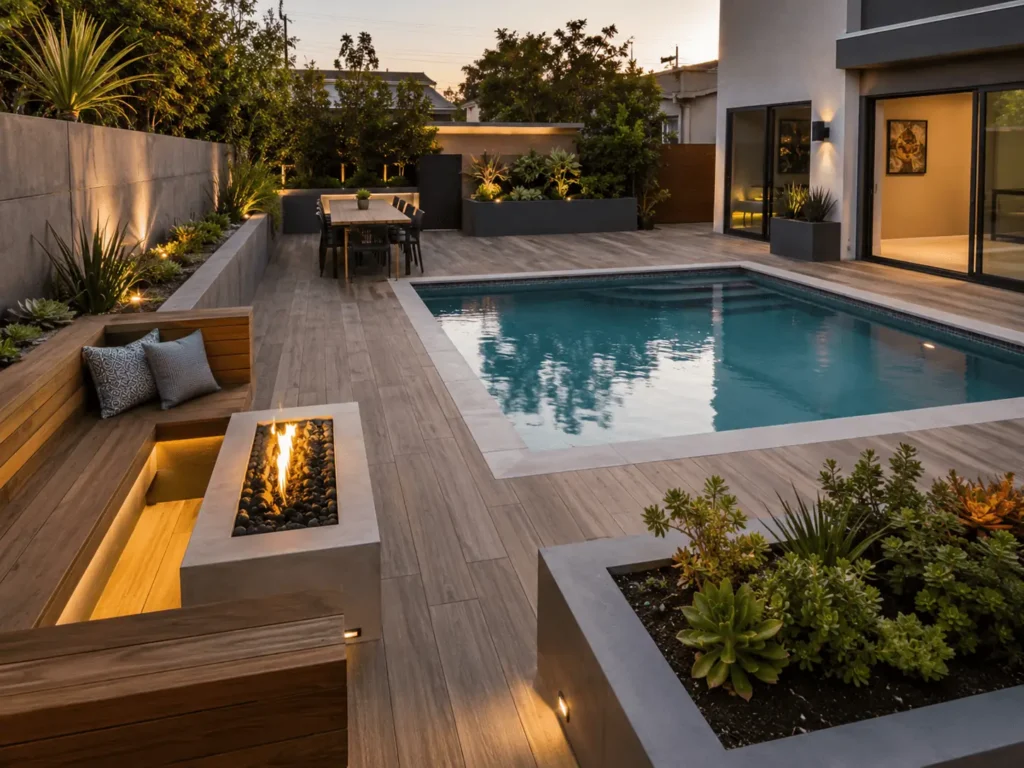
Making the Pool and Hardscape Look Like One Design
Polished backyards share a limited palette, repeating materials, and clean transitions where surfaces meet. Coping, deck, and tile meet most often, and choosing them together prevents clashing colors and awkward seams. Repeating one paver tone across patio, walkway, and pool deck, with an accent for borders and steps, usually beats a different material in every area.
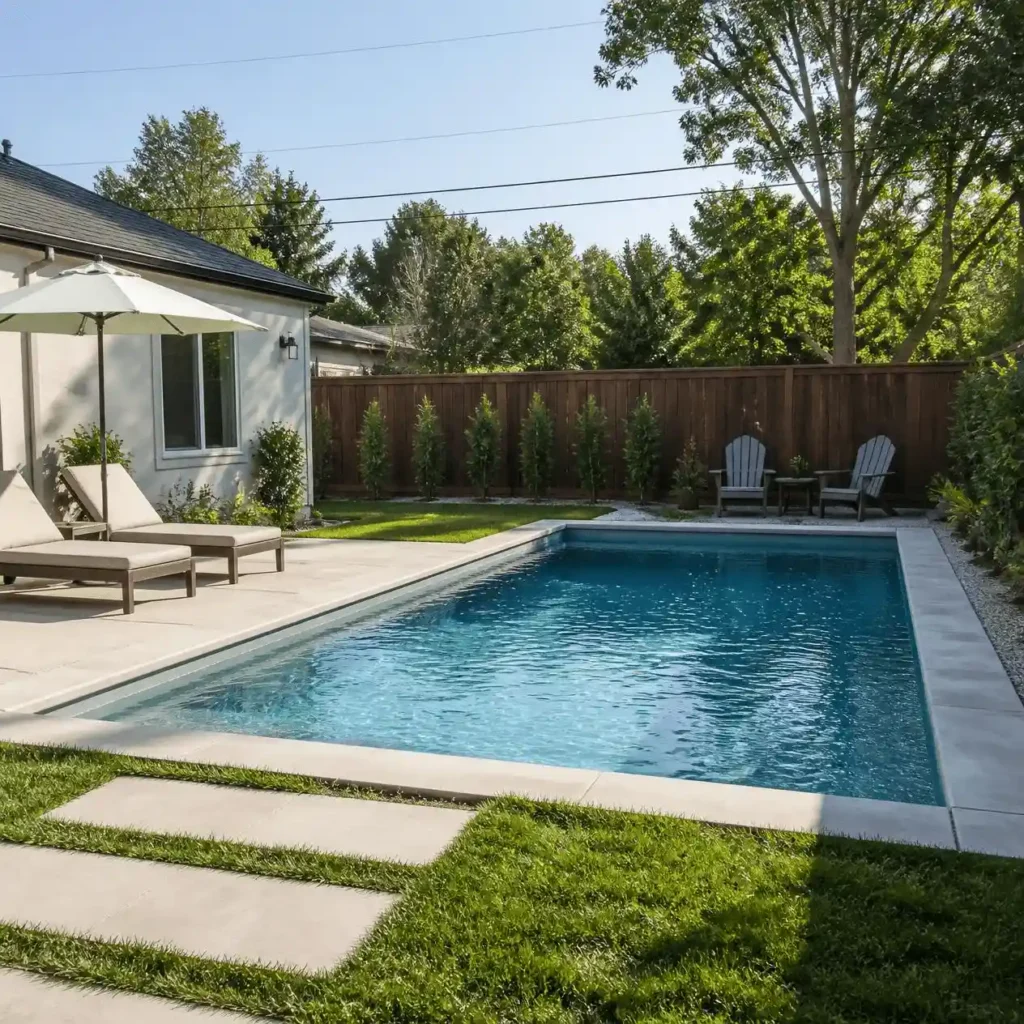
The project gallery of pool and remodeling photos is a useful place to collect ideas about deck patterns, coping, and how surfaces meet the water.
Durability and Long-Term Care
Hardscape is low upkeep, not no upkeep. Sweep and rinse regularly, watch for joints that have lost material, and address standing water or shifting early. Sealers and coatings wear and may need renewal, and in Southern California, intense sun can fade colors over time. If something moves, repair the cause as well as the surface.
Key Points
- Choose materials by heat, repairability, look, and budget together, not by appearance alone.
- Test samples in direct sun, because color and reflectivity affect surface temperature.
- Base preparation and slope determine how long a surface stays flat and dry.
- A permeable design is a deliberate build and should suit your soil.
- Design the deck, coping, patio, and walkways together so materials and colors repeat.
- Call 811 before any digging.
Explore Hardscape Options for Your Pool and Patio
The right hardscape does more than just surround your pool—it defines your entire outdoor living experience. Whether you want the timeless elegance of natural stone, the durable versatility of interlocking pavers, or the heat-reflective comfort of a cool-deck coating, choosing the right materials ensures safety, slip resistance, and longevity under the California sun. A thoughtfully designed patio seamlessly connects your indoor and outdoor spaces, creating a stunning, low-upkeep oasis that is tailored to your lifestyle and built to last.
If you’re considering pavers, stone, or a cool-deck coating for your pool area or patio, GWP Builders can walk you through the options for your yard and budget. GWP Builders serves Los Angeles and the San Fernando Valley and offers free, detailed, itemized quotes. Call (888) 515-4488 to start the conversation.
Frequently Asked Questions
Are pavers a good choice for a pool deck?
Yes, pavers are a popular pool deck material because they offer a premium look and can be repaired by resetting individual units. Color and finish still affect heat and traction, so ask about slip resistance. A well-built base matters as much as the paver itself.
What is the difference between hardscaping and landscaping?
Hardscaping is the built, non-living part of a yard, such as patios, walkways, decks, walls, and steps. Landscaping refers to the living elements, such as plants, trees, and lawns. The two work best when planned together.
Which hardscape surface stays coolest in the sun?
Lighter, more reflective surfaces generally stay cooler than dark ones. GWP Builders notes that standard concrete and dark materials absorb heat, and cool-deck coatings are designed to reduce heat underfoot. Shade and surface texture also change how a deck feels.
Why do pavers sink or become uneven?
Pavers usually sink or tilt because of problems beneath them, such as a poorly compacted base, water washing material away, or soil movement. The base and drainage need to be corrected before the pavers are reset.
Do I need to call 811 before installing a patio or deck?
Yes, any project that involves digging should start with a call to 811. In California, notice is required at least two working days before the dig, not counting the day you call. Your contractor can usually make the request, but confirm that it has been made.