
How do you choose the right contractor for a pool build?
The right pool contractor is one who holds the correct California license, can show proof of insurance, puts the scope and price in a detailed written contract, and has built pools on sites like yours. Start by verifying the license, then compare estimates line by line instead of choosing by the bottom number.
A pool involves excavation, structural steel, plumbing, electrical work, equipment, tile, decking and inspections, and mistakes are expensive to correct once the shell is poured. In Los Angeles and the San Fernando Valley, slopes, varied soils, tight side-yard access and city permit requirements add variables of their own.
Overview
This guide is for homeowners planning an in-ground pool who want a practical way to compare contractors. It covers licensing, insurance, experience, estimates, contracts, payments, permits, change orders, warranties and red flags, and ends with questions you can bring to every consultation. It is general guidance, not legal advice; for contract questions specific to your project, consult a licensed attorney.
Start With the License
In California, the Contractors State License Board (CSLB) licenses contractors by trade. According to the CSLB, a C-53 swimming pool contractor constructs swimming pools, spas or hot tubs, including installation of solar heating equipment. That is the classification to look for when you are hiring a company to build a pool.
Do not rely on a license number printed on a truck or a website. Use the CSLB’s Check a License tool to look up a contractor by license number or business name and confirm the status and classification. CSLB also recommends reading its hiring-a-contractor guidance before you sign anything. Apply this check to every company on your list.
Confirm Insurance and Who Actually Does the Work
Ask each contractor for proof of insurance. Many contractors say they’re insured; the useful step is to request documentation rather than accept the claim.
Also ask who will do the work. Some companies use a different subcontractor for each phase, which can create accountability gaps. Ask who your day-to-day contact will be, who supervises the crew on site, and who is responsible when two trades disagree.
Judge Pool-Specific Experience
Pool construction depends on details such as how the shell is engineered for the soil, how the plumbing is sized, where the equipment pad goes, and how decking is drained away from both the pool and the house.
Review the portfolio for similar conditions
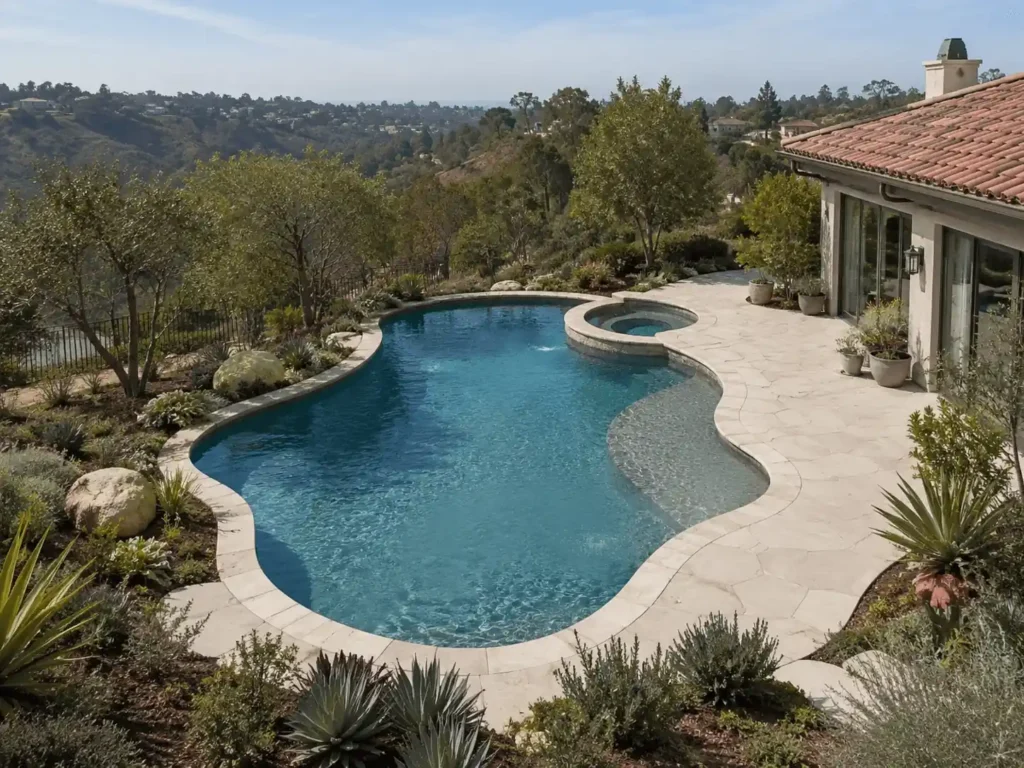
Look for completed projects that resemble yours: a hillside or sloped lot, a compact yard, a modern geometric design, an attached spa, or a tight-access site. Photos are helpful, but ask what challenges the project involved and how they were solved.
Read references and reviews carefully
Talk to past clients when you can, and ask about communication, site cleanliness, how problems were handled, and whether the result matched the contract. When reading online reviews, look for patterns: do several reviewers mention the same strength or the same complaint, and does the contractor respond professionally to criticism?
Compare Itemized Estimates, Not Just Totals
Two estimates with different totals are often describing different projects. A detailed, itemized estimate shows what is included: excavation, steel and shell, plumbing, equipment, tile, coping, decking, interior finish, permits, and commissioning. Allowances and exclusions should be labeled plainly.
When you lay estimates side by side, look for gaps rather than just differences. If one estimate omits the equipment pad, decking, drainage, or permit fees, the lower total may simply be an incomplete one.
Questions to Ask Every Contractor
The table below turns the key evaluation points into questions you can reuse in each consultation.
| What to ask | Why it matters | What a good answer looks like |
|---|---|---|
| What is your license classification and number? | A C-53 is the pool classification | A number you can confirm on the CSLB site, in matching business name |
| Can you provide proof of insurance? | Protects you if damage or injury occurs | Documentation provided on request, without hesitation |
| Who will manage my project and who does the work? | Accountability and communication | A named contact and a clear explanation of the crew structure |
| Is the estimate itemized? | Makes offers comparable | Line items, labeled allowances and written exclusions |
| Who obtains permits and handles inspections? | Unpermitted work creates problems later | The contract says the contractor obtains necessary permits |
| What warranty is offered and in what form? | Clarifies what is covered and for how long | Written terms that state coverage, exclusions and duration |
Contracts, Payments and Change Orders
A good contract describes the work in detail. According to the CSLB’s homeowner checklists for home improvement contracts, a contract should describe the work, materials, and equipment; include start and end dates; and require the contractor to obtain the necessary permits. The same guidance says a down payment should be no more than 10% of the contract price or $1,000, whichever is less, and that with a payment schedule, you should pay only as work is completed. Changes or additions should be in writing.
Treat those points as a baseline, never sign a contract with blank sections, and keep copies of everything.
A meticulously detailed contract is your strongest safeguard against unexpected costs and project delays. By setting clear expectations from the start, you and your builder share a unified vision, keeping the construction process collaborative and stress-free rather than a source of anxiety.
Permits, Timeline and Warranty Expectations
Pool projects require permits and inspections, and the contract should state who handles them.
On timelines, ask for a written schedule with the major phases. Weather, permit review, and finish selections all influence timing, so a credible contractor explains the variables.
For warranties, ask what is covered, who provides coverage (the contractor, the manufacturer, or both), how long it lasts, and what you must do to keep it valid. Get the terms in writing.
Ultimately, these structural checkpoints and guarantees do more than just satisfy local regulations—they protect the long-term value of your property. A beautifully designed pool is a significant financial investment, and having robust warranties alongside verified, code-compliant construction ensures that your backyard oasis remains a safe, durable source of joy for decades to come.
Common Red Flags
Be cautious if a contractor cannot be found on the CSLB site or the name and classification do not match, pressures you to sign immediately, asks for a large down payment, provides a vague estimate, suggests skipping permits, or is unwilling to put changes, exclusions or warranty terms in writing. GWP’s guide to swimming pool construction mistakes to avoid covers related pitfalls.
Trusting your instincts during the vetting process is just as crucial as verifying credentials. A reputable builder will always prioritize your peace of mind over a quick sale, willingly answering tough questions and demonstrating a commitment to transparency, safety, and unwavering professional ethics.
How GWP Builders Fits These Criteria
Apply the same checklist to GWP Builders. GWP Builders holds a C-53 swimming pool license, and its website lists CSLB license #974163; verify it on the CSLB site as you would for any contractor. The company’s website also describes it as licensed and insured, which is GWP’s own statement, so ask for proof of insurance during your consultation.
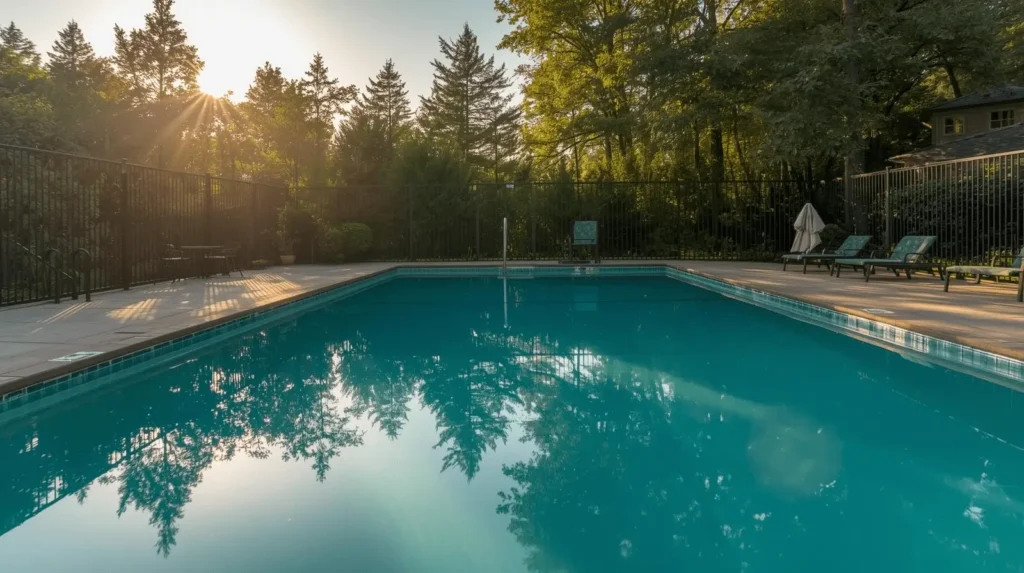
On its new pool construction page, GWP describes custom in-ground gunite pools built from first sketch to final tile with one accountable crew and a single project manager. The page states that the team pulls all permits and handles City of Los Angeles permits, structural engineering and inspections. GWP also offers free, detailed, itemized quotes. For a typical timeline, the page cites about six to ten weeks from excavation to first swim, depending on weather, permits and finish selections. You can read more about GWP Builders, a family-owned company based in Woodland Hills.
Plan a Pool Construction Consultation
If you are preparing to interview contractors for a pool in Los Angeles or the San Fernando Valley, GWP Builders is happy to walk you through your site, your goals and a detailed, itemized quote. Bring this checklist and ask us anything on it. Call (888) 515-4488 to schedule a pool construction consultation.
Transforming your backyard into a personal luxury resort should be an exciting and deeply rewarding journey. Let our experienced professionals simplify the construction process, turning your dream design into a stunning, swim-ready reality you and your family will cherish for years to come.
Key Points
- Look for a C-53 license and confirm its status and classification with the CSLB before any meeting turns into a contract.
- Judge experience by projects with conditions like yours, not just attractive photos.
- Treat an itemized estimate as a comparison tool; gaps and vague allowances matter more than a lower total.
- Use the CSLB guidance on down payments, payment schedules and written changes as your baseline.
- Get permits, timeline assumptions and warranty terms in writing, and walk away from pressure tactics.
Frequently Asked Questions
What license does a pool contractor need in California?
A swimming pool contractor typically holds the C-53 classification issued by the CSLB. The CSLB describes a pool contractor as one who constructs swimming pools, spas or hot tubs, including installation of solar heating equipment. Confirm the license number, classification and status on the CSLB’s online lookup rather than relying on what an advertisement says.
How much down payment should I make on a pool?
The CSLB’s homeowner guidance says a down payment should be no more than 10% of the contract price or $1,000, whichever is less. When a contract includes a payment schedule, the CSLB advises paying only as work is completed. If a contractor asks for more up front, ask them to explain and consider that a reason to slow down.
Should I compare more than one pool estimate?
Yes, comparing estimates helps you see what is included, what is excluded and where allowances may be hiding. Make sure each estimate covers the same scope, including equipment, decking, drainage, permits and interior finish. A lower total with fewer line items often reflects a smaller scope, not a better deal.
Who is responsible for pool permits?
The contract should state who obtains permits. The CSLB’s checklist says a home improvement contract should require the contractor to obtain the necessary permits. GWP Builders states on its pool construction page that its team pulls all permits and handles City of Los Angeles permits, structural engineering and inspections.
What should a pool change order include?
A change order should describe the change, its effect on price and schedule, and be in writing before the work proceeds. The CSLB advises that changes or additions to a home improvement contract be in writing. Keep a signed copy, and make sure the revised total matches the original contract plus the approved changes.