
Is a saltwater system right for a new pool?
A saltwater pool system is a different way of supplying chlorine, not a way of doing without it. A salt chlorine generator turns a small amount of dissolved salt into chlorine as the water circulates, so the pool is still sanitized by chlorine. What changes is where that chlorine comes from, how the water feels, and which equipment you maintain.
For many homeowners that trade is worthwhile: water that feels softer and a steadier routine, in exchange for more equipment and a few new upkeep tasks. Whether it is right for your pool depends on your interior finish, the materials around the water, and how you prefer to care for the pool.
The best time to decide is at the design stage, when plumbing and the equipment pad can be planned for salt from day one. This guide explains how the systems work, what to weigh, and what to ask a builder before you commit.
Overview
This article covers how salt chlorine generators work, how a saltwater pool compares with a traditional chlorine pool, and what to consider around finishes, equipment, and upkeep. It is written for homeowners in Los Angeles and the San Fernando Valley who are planning a new pool or deciding whether salt belongs in the design.
You will learn what salt levels and cell scaling mean in practice, who tends to prefer saltwater, and how adding salt to a new pool differs from converting an existing one.
What a Saltwater Pool Actually Is
A saltwater pool is a pool that makes its own chlorine. Instead of adding chlorine products directly, you keep a modest level of salt dissolved in the water, and a generator converts it into chlorine as water passes through.
Michigan’s environmental agency, in guidance written for public pools, puts it plainly: salt is not a disinfectant or sanitizer, and the free chlorine generated from the salt is what disinfects. GWP Builders describes it the same way on its service pages: it still uses chlorine, just generated on demand from salt.
How a Salt Chlorine Generator Works
The generator has two parts: a control unit and a cell. Water containing dissolved salt flows through the cell, where an electrical charge across metal plates forms free chlorine. That chlorine then circulates through the pool and sanitizes the water.
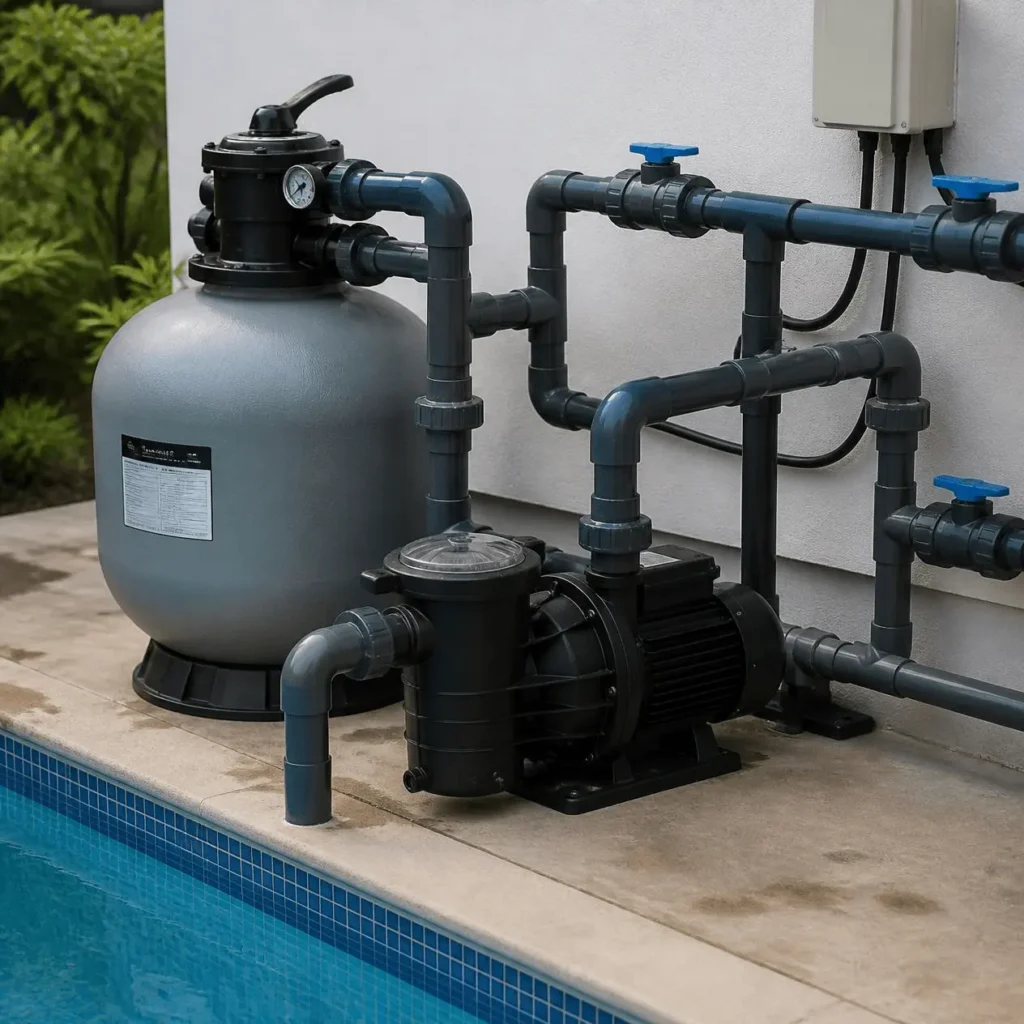
The control unit lets you set how much chlorine the cell produces. A generator too small for the pool will struggle in summer, so sizing it to the pool volume matters. GWP Builders matches generator size to pool volume, and the equipment pad houses the unit and cell alongside the pump and filter.
Salt Levels
Most inline salt generators need about 3,000 parts per million of salt, according to the same Michigan guidance, which also stresses following the manufacturer’s range. That is far less salty than the ocean.
Cell Scaling and Descaling
Heat on the cell plates causes calcium scale to build up, reducing chlorine production. Manufacturers therefore require routine upkeep. Unbalanced water can also cause scale in nearby piping. In Southern California, where summers are long and the sun keeps pool water warm, it is wise to plan for regular cell checks rather than treating the cell as a set-and-forget part.
Saltwater and Traditional Chlorine Compared
The table below is a neutral comparison; neither approach is universally better.
| Consideration | Saltwater system | Traditional chlorine |
|---|---|---|
| How chlorine is supplied | Generated from dissolved salt by a cell | Added directly as a chlorine product |
| Feel of the water | Often described as softer | Varies with balance and product used |
| Routine upkeep | Less hands-on chlorine handling; cell checks and descaling | More frequent chlorine additions |
| Equipment | Adds a generator and control unit | No generator needed |
| Considerations | Finish, metal, and stone compatibility; scale on the cell | Handling and storing chlorine products |
Does Saltwater Feel Different?
Many owners find it does. GWP Builders’ saltwater conversion page says saltwater feels softer, smells less, and is gentler on skin and eyes, and that it needs less hands-on chemical juggling. Those are the company’s descriptions, and experience varies; unbalanced water can feel harsh in any pool.
Finishes, Metal, and Equipment: What to Ask
Salt and surfaces interact, so compatibility is a real planning question. The National Plasterers Council explains that pool finishes are constantly submerged, so water chemistry and a finish’s minerals are always interacting. The same guidance notes that a finish can change in appearance over time, usually cosmetically, and that planning decisions significantly affect how well a pool keeps its look.
Before choosing salt, ask your builder about these items:
- Whether your chosen plaster, quartz, or pebble finish suits a salt system.
- How natural stone coping and decking will be sealed and cared for.
- Whether metal fixtures, rails, and any older equipment are salt-compatible.
- Which heater, pump, and filter models are approved for use with salt.
GWP Builders says properly balanced salt water is fine for most modern finishes and equipment, and that problems come from poor balancing or incompatible older parts.
Upkeep Still Matters With Salt
A salt system reduces some chores but doesn’t eliminate the need to test and balance. The CDC’s home pool water treatment and testing guidance recommends keeping pH between 7.0 and 7.8 and chlorine at least 1 ppm, or at least 2 ppm if stabilizer is used. It also recommends testing chlorine and pH at least twice a day, more with heavy use, and notes that DPD test kits are more accurate than test strips.
Salt level, stabilizer, calcium, and cell condition are also worth checking on a schedule. GWP Builders handles saltwater conversions as part of pool remodeling projects, including equipment checks and salt-cell sizing. Balanced water is also the biggest factor in how long a finish and equipment last, as the company notes on its repair page.
Pros and Cons to Weigh
On the plus side, many owners like the softer feel, the steadier chlorine production, and having less to measure out by hand. Salt systems can also be tied into pool automation so settings are adjusted from one place.
On the other side, the generator is additional equipment, and cells need descaling and eventual replacement. Salt can be harder on certain materials when the water is poorly balanced, and the system still depends on regular testing. These are reasons to plan carefully, not reasons to avoid salt.
Who May Prefer Saltwater
Saltwater tends to suit owners who want a gentler feel in the water and a more automated routine, and who are comfortable with a little more equipment. It also appeals to people who dislike storing and handling chlorine products.
Traditional chlorine may suit owners who prefer simpler equipment or have materials that need extra care around salt. Either choice works when the water is balanced and maintained.
Planning Salt Into a New Pool
Adding salt at the design stage is simpler than adding it later. The plumbing, electrical connections, and equipment pad can be laid out for the generator from the start, and finish and coping decisions can be made with salt in mind. GWP Builders’ new pool construction includes an equipment pad ready for heaters, automation, and salt, and a custom design starts with a site study and material selection.
That planning matters in the San Fernando Valley and across Los Angeles, where lot constraints, sun exposure, and equipment placement all shape how a system is installed. Ask for the generator and control unit to be specified in your itemized quote.
Converting an Existing Pool
If you already own a chlorine pool, a saltwater pool conversion is often possible. Most pools can be converted once you confirm the equipment and finish are salt-compatible. A conversion typically includes a system assessment, installation of a correctly sized generator, water chemistry, an equipment check, and an owner walkthrough. For more background, read GWP’s post on saltwater conversions for LA homeowners.
Talk Through Saltwater for Your Pool
If you are designing a new pool or considering a change to an existing one, GWP Builders can talk through whether a salt system fits your finish, equipment, and routine. Call (888) 515-4488 to discuss your plans and ask for an itemized quote. As with any contractor, confirm the license on the California Contractors State License Board site before you sign.
Choosing the right option for your backyard shouldn’t involve guesswork or high-pressure sales tactics. Our team is dedicated to providing honest, transparent advice tailored specifically to your property’s unique needs, ensuring you have all the information required to build or upgrade a pool that perfectly complements your Southern California lifestyle.
Key Points
- Saltwater pools use chlorine that a generator makes from dissolved salt.
- Water feel and routine chores differ, but testing and balancing still apply.
- Cell scaling is a normal upkeep item, so plan for routine upkeep.
- Check finish, metal, and equipment compatibility before choosing salt.
- Salt is easiest to plan during design, when the equipment pad can be set up for it.
- Existing pools can often be converted once compatibility is confirmed.
Frequently Asked Questions
Does a saltwater pool still use chlorine?
Yes, a saltwater pool still uses chlorine. A generator makes it from dissolved salt as the water circulates, and that chlorine does the disinfecting. The salt itself is not the sanitizer.
How much salt does a saltwater pool need?
Most inline salt generators need about 3,000 ppm of salt, according to Michigan’s guidance written for public pools. Always follow your generator manufacturer’s recommended range, since models differ.
Can a saltwater system damage pool finishes or equipment?
It can if the water is poorly balanced or if older parts are not salt-compatible. Ask your builder to confirm that your finish, coping, metal fixtures, and equipment work with salt before you commit.
Do I still need to test the water in a saltwater pool?
Yes. The CDC recommends testing chlorine and pH at least twice a day for home pools, more with heavy use, and DPD kits are more accurate than strips. A salt system does not replace regular testing and balancing.
Can I add saltwater to a pool I already own?
Often yes. Most pools can be converted once the equipment and finish are confirmed as salt-compatible. A professional should assess the system, size the generator to the pool volume, and balance the water.