
What are the most eco-friendly pool deck materials?
The most eco-friendly pool deck materials are generally the ones that last the longest, stay cooler, drain water responsibly, and can be repaired instead of replaced. Interlocking pavers, natural stone, light-colored cool-deck coatings, and decks built with reused or recycled concrete aggregate are common choices. Durability and repairability matter as much as the material itself, because a deck that fails early creates waste.
Choosing a sustainable pool deck is harder than it sounds, because the word “eco-friendly” gets attached to almost every product. A deck that is truly sustainable has to do several jobs at once. It must stay comfortable underfoot in Southern California heat, drain well, last for many years, and avoid unnecessary waste when it is built or repaired.
This article looks at what makes a pool deck material more environmentally responsible, how the common options compare, and which questions help you separate real benefits from marketing language.
What Makes a Pool Deck Material Eco-Friendly
There is no single label that certifies a pool deck as sustainable, so it helps to evaluate materials against a few practical criteria.
- Longevity. A surface that lasts decades uses fewer resources than one replaced every few years.
- Repairability. Materials that can be fixed in sections, such as individual pavers, avoid tearing out the whole deck.
- Heat reduction. Cooler surfaces make the deck more usable and can reduce the heat that builds up in the yard.
- Water management. Good drainage, and in suitable soils permeable designs, keeps rain from becoming runoff.
- Recycled or reused content. Using crushed concrete or reclaimed material reduces the need for new aggregate.
- Low upkeep. A deck that needs fewer harsh chemicals, frequent resealing, or heavy washing has a lighter footprint.
Comparing Pool Deck Materials
No material wins on every measure. This qualitative comparison reflects general industry knowledge and the deck options GWP Builders Inc. describes on its service pages.
| Material | Heat comfort | Repairability | Sustainability notes |
|---|---|---|---|
| Interlocking pavers | Lighter colors stay cooler | Individual units can be lifted and reset | Long life, easy repair, some designs allow drainage through the joints |
| Natural stone | Varies by stone and color | Pieces can be reset, but matching stone may take effort | Very durable, but sourcing and transport affect its footprint |
| Cool-deck coatings | Designed to reduce heat underfoot | Renewed by recoating sound concrete | Extends the life of an existing slab and avoids demolition |
| Standard concrete | Can absorb heat, especially in darker colors | Cracks need patching or resurfacing | Often budget-friendly, and demolished concrete can often be recycled |
Why Heat Matters in an Eco-Friendly Deck
Hot surfaces are a comfort and safety problem around a pool, where people walk barefoot. The Environmental Protection Agency explains that cool pavements reflect more sunlight, promote water evaporation, or are otherwise designed to stay cooler than conventional pavement. In an Arizona pilot study cited by the EPA, conventional asphalt reached surface temperatures up to 152 degrees Fahrenheit at midday, while cool pavements stayed roughly 10 to 16 degrees cooler.
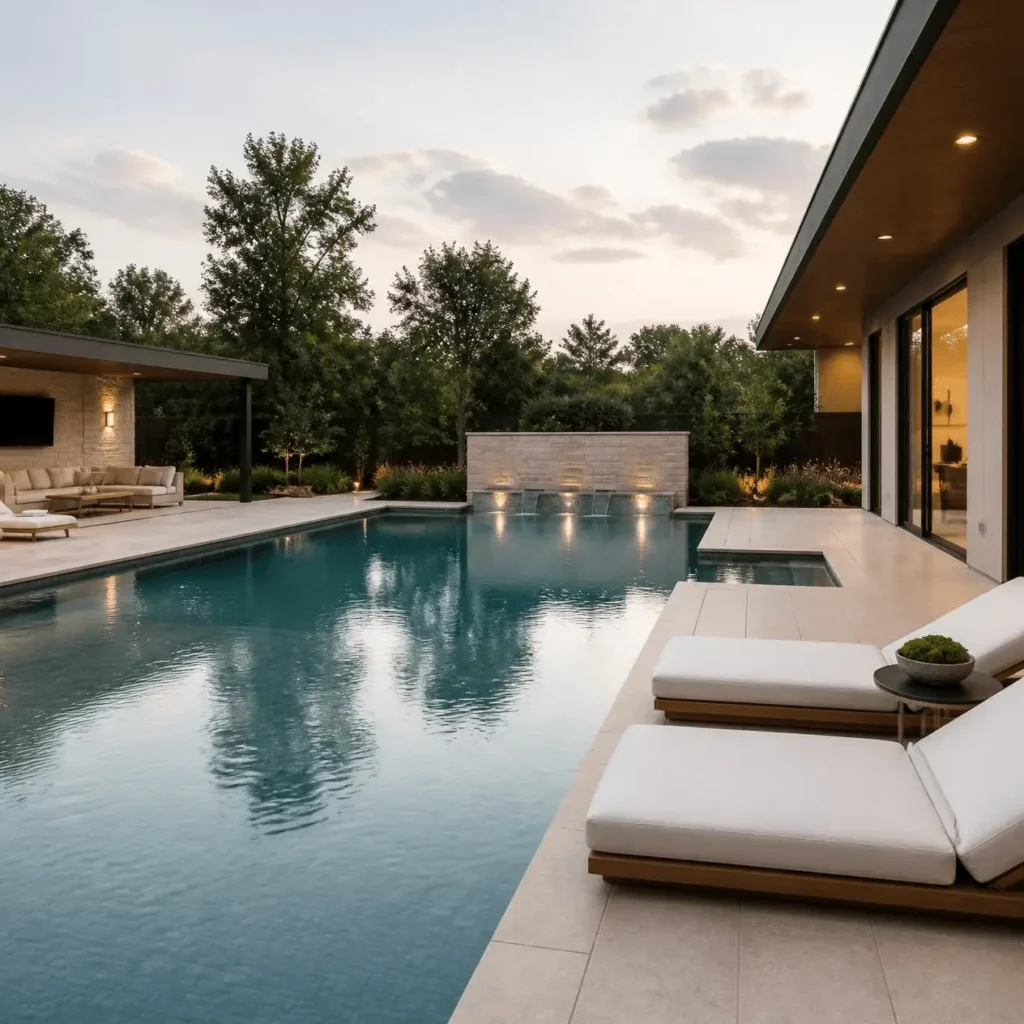
That study covers pavements, not pool decks, but the principle carries over. Color, reflectivity, and shade all influence how hot a deck gets. Lighter materials generally stay cooler than dark ones, and testing a sample in direct afternoon sun is a simple way to avoid regret.
Pavers, Stone, and Cool-Deck Coatings
GWP Builders Inc. lists cool-deck coatings, modern pavers, stamped concrete, and natural stone among the options on its pool decks and hardscape page. Each fits a different goal.

Pavers are a strong choice for sustainability because they are repairable. If a section settles or stains, the affected pavers can be lifted and reset instead of replacing the whole surface. Their joints can also allow some drainage, though how much depends on the base, the joint material, and your soil.
Natural stone has a long service life and a distinctive look. Its environmental profile depends on where it comes from, so ask about sourcing, and make sure the stone you choose is suitable for wet, barefoot use.
Cool-deck coatings are applied over sound concrete, which means the existing slab stays in place. Extending the life of a slab avoids demolition and new material, and the lighter surface reduces heat. Coatings do wear and need renewal over time.
Reusing Concrete and Reducing Waste
Demolition is where many decks create waste. The EPA notes that concrete is often crushed and recycled into aggregate, and that concrete and masonry can be reused on site as fill or subbase material, which reduces the need to mine new material and helps conserve landfill space. In a deck remodel, ask whether removed concrete can be recycled and whether suitable material can be reused as base. Whether reuse is appropriate depends on the condition of the material and the engineering of the base.
Choosing to resurface or recoat a sound deck, instead of replacing it, may be the greenest option of all.
Drainage and Water Management
A pool deck should shed water away from the pool and the house. Standing water leads to slippery surfaces, mineral staining, and settling. In Los Angeles and the San Fernando Valley, where rain arrives in short, heavy bursts, drainage design is part of sustainability. Permeable paver systems can help in suitable soils, but they are a deliberate build with a specific base, and they are not right for every yard, especially on hillsides or clay-heavy soils. GWP Builders Inc. addresses crack and drainage repair as part of its deck work, fixing settling and drainage so water runs away from the pool and house.
Planning a Deck Remodel With Sustainability in Mind
If your deck is part of a larger pool remodel, planning the surface, coping, tile, and drainage together prevents mismatches and rework.
For a closer look at heat-conscious surface choices, GWP Builders Inc. has an article on pool deck ideas and materials for Southern California heat.
Questions worth asking a contractor include:
- How will water drain, and where will it go?
- Can existing concrete be reused or recycled?
- How does this material perform in heat and direct sun?
- How are individual areas repaired if they fail?
- What maintenance and resealing will be needed?
Key Takeaways
- Longevity, repairability, heat comfort, and drainage are the practical markers of a sustainable deck.
- Pavers are repairable, and cool-deck coatings can extend the life of an existing slab.
- Lighter, more reflective surfaces generally stay cooler in the sun.
- Recycling or reusing demolished concrete can reduce waste when the material is suitable.
- Permeable designs need the right soil and base, so they are not a universal fix.
Frequently Asked Questions
What is the most eco-friendly pool deck material?
There is no single answer, but durable, repairable materials such as interlocking pavers and natural stone rank well because they last and can be fixed in sections. Cool-deck coatings also help by extending an existing slab. The best choice depends on your site, budget, and heat tolerance.
Are permeable pavers good for a pool deck?
They can be, in suitable soils and with a proper base. Permeable designs let some rain pass through joints and into the ground, but poor soils or hillsides may limit their performance. A contractor should assess drainage before recommending them.
Do cool-deck coatings stay cooler than regular concrete?
Cool-deck coatings are designed to reduce heat underfoot compared with standard concrete, especially darker concrete. Actual temperature depends on color, texture, and sun exposure. Testing a sample in direct sun is the most reliable way to judge.
Can old pool deck concrete be recycled?
Often yes. Concrete is commonly crushed and recycled into aggregate, and some may be reused on site as fill or base. Ask your contractor about the plan, because the condition of the material and the structural needs of the base affect what is possible.
Is stone or pavers better for a sustainable pool deck?
Both can be sustainable, and both last a long time. Pavers are easy to repair and offer a wide range of colors, while natural stone has a distinctive look but depends heavily on where it is sourced. Compare heat, traction, repair options, and budget before deciding.
Plan a Lower-Impact Pool Deck With GWP Builders Inc.
If your deck is cracked, hot underfoot, or ready for an update, GWP Builders Inc. can help you compare pavers, stone, coatings, and drainage fixes for your property. Contact GWP Builders Inc. for a free consultation and a detailed, itemized estimate for your Los Angeles or San Fernando Valley pool deck. Call (888) 515-4488 to get started.