
What affects the cost of pool leak detection?
Pool leak detection cost depends on the testing methods needed, the number of lines or components to test, how accessible the pool and equipment are, and how large the pool is. Repair costs are separate and depend on where the leak is, what must be removed to reach it, and how much restoration follows. A written, itemized estimate that separates detection from repair makes the total easier to compare.
If your pool seems to be losing more water than evaporation explains, the next question is usually about money. What will it cost to find the leak, and what will it cost to fix? The honest answer is that it depends, and the reasons are specific. Two pools can lose the same amount of water and need very different work.
This article explains the factors that shape the cost of pool leak detection and repair. It does not quote prices, because costs vary by pool, location, and scope. Instead, it shows what drives the number, so you can read an estimate with confidence and ask better questions.
Detection and Repair Are Two Different Costs
Many homeowners lump everything into one price, but leak work has two stages. Detection finds where the water is escaping. Repair fixes it. Detection can be relatively contained, while repair swings widely, depending on whether the problem is a loose fitting, a cracked line, a skimmer seal, a light niche, or a crack in the shell.
Ask any contractor whether the estimate covers detection only, repair only, or both. Also ask what happens if the leak is found in more than one place, because multiple leak sites are not unusual.
First, Confirm It Is Really a Leak
Evaporation is normal, especially in sunny, dry weather and when wind is blowing. Before paying for testing, you can run simple checks. A bucket test compares the water level in a bucket set on a pool step with the pool level over a day or two, and a faster drop in the pool suggests a leak. Also check whether the equipment area is wet, whether the autofill is running more than usual, and whether the ground or deck near the pool is soggy.
The Environmental Protection Agency suggests checking your water meter at two readings, before and after a two-hour period with no water use, as a way to spot household leaks. That is useful for ruling out irrigation or supply lines, though a pool with an autofill needs extra care when interpreting results. For a fuller checklist, see GWP Builders Inc.’s article on the signs you need swimming pool leak detection.
The Main Pool Leak Detection Cost Factors
| Cost factor | Why it affects the price | What you can do |
|---|---|---|
| Testing methods needed | Visual checks, dye tests, pressure tests, and electronic listening take different time and equipment | Ask which methods are planned and why |
| Number of lines and components | More lines, skimmers, returns, lights, and equipment mean more tests | Share what you know about where water is disappearing |
| Pool size and type | Larger or more complex pools take longer to test | Provide plans or equipment details if available |
| Access to the site | Tight access, hillside yards, and crowded equipment pads add time | Clear access to the pool and equipment |
| Age and condition | Older plumbing and finishes may have multiple weak points | Share past repair history |
| Repair scope | Fixing a fitting costs less than reaching a buried line | Request itemized repair options |
| Demolition and restoration | Removing decking or coping to reach a pipe, then rebuilding, adds labor and materials | Ask what restoration is included |
| Water and rebalancing | Lowering, refilling, and rebalancing water add time and utility cost | Ask whether water is included in the estimate |
Testing Methods and Why They Matter
Different methods answer different questions, and the right mix depends on the symptoms.
- Visual inspection and dye testing can reveal leaks at skimmers, returns, tile lines, and cracks by showing where colored water is drawn.
- Pressure testing isolates plumbing lines to see whether they hold pressure, which separates plumbing leaks from shell or structural issues.
- Electronic listening uses sensitive equipment to detect the sound of escaping water in lines or the shell.
- Camera or line inspection can sometimes show the condition of lines that cannot be seen directly.
A thorough diagnosis may involve more than one method, so a quote that names only one technique may not cover every possible source.
Site Conditions in Los Angeles and the Valley
Local conditions can change the effort involved. Hillside lots, tight side yards, and pools surrounded by hardscape make it harder to reach equipment and lines. Older pools may have plumbing that has seen several upgrades, and clay or shifting soils can stress pipes and shells over time. If the pool is part of a remodel, finding the leak before finishes are replaced saves money and avoids repeated work.
Repair Scope: Where the Real Variation Happens
Once the leak is located, the repair path determines the final cost. A leaking fitting, a worn gasket, or a skimmer seal is usually a smaller job. A buried line may require opening a section of deck and then restoring it. A shell crack, a failed light niche, or structural movement can require more extensive work and, in some cases, resurfacing.
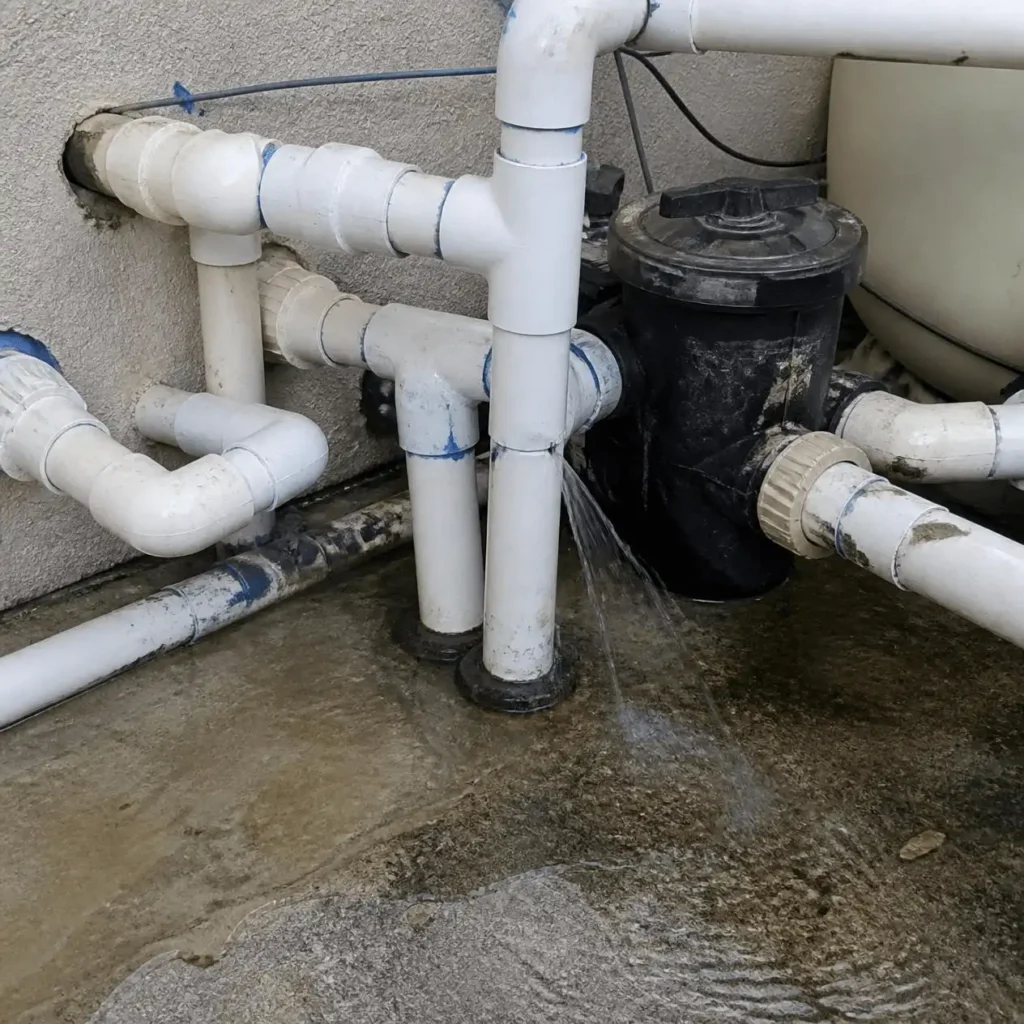
GWP Builders Inc. provides pool leak detection as a dedicated service, so the diagnosis is a defined step rather than a guess.
The fix is a separate decision. GWP Builders Inc. also performs pool repair, which means the diagnosis and the repair can be coordinated by one team. That can reduce the back-and-forth between separate vendors, though you should still ask for the scope of each stage in writing.
Why Waiting Can Cost More
A leak that is ignored does not stay small. Escaping water can erode soil under decking, undermine plumbing, damage equipment, and raise utility bills. It can also make water chemistry harder to hold steady. Acting early usually keeps the repair smaller, even if the testing feels like an added expense.
How to Compare Leak Detection Estimates
Estimates are only comparable when they cover the same scope. The California Contractors State License Board recommends getting several written bids based on the same scope, verifying the contractor’s license, and being cautious about a bid that is much lower than the rest. It also notes that a down payment generally cannot exceed 10 percent of the contract price or $1,000, whichever is less.
Questions to ask:
- What testing methods are included?
- Does the estimate cover the whole pool or only one suspected area?
- Is repair included, or only detection?
- What restoration is included if decking or coping must be opened?
- Who handles water refilling and rebalancing?
Key Takeaways
- Detection and repair are separate costs, and repair varies the most.
- Testing methods, number of components, access, and pool age all affect detection cost.
- Demolition and restoration can add significantly to repair totals.
- Confirm the leak with simple tests before paying for detection.
- Compare itemized, written estimates that cover the same scope.
Frequently Asked Questions
How much does pool leak detection cost?
The cost depends on the testing methods used, the size and complexity of the pool, access, and the number of components tested. A specific figure is not useful without those details. Ask for a written, itemized estimate after an inspection.
Is pool leak detection separate from leak repair?
Yes, they are different stages. Detection locates the leak, and repair fixes it. Some contractors offer both, but you should confirm in writing what each stage includes.
How do I know if my pool is leaking or just evaporating?
A bucket test is a common check. Place a bucket of water on a pool step, mark both water levels, and compare after a day or two. If the pool drops more than the bucket, a leak is likely.
Can a pool leak damage my yard?
Yes, ignored leaks can soften soil, undermine decks, and damage equipment. A persistent wet spot, sinking pavers, or soggy ground near the pool deserves prompt attention. Early action usually limits repair scope.
What affects pool leak repair cost the most?
The location of the leak and how much must be removed to reach it have the biggest impact. A small fitting is usually simple, while a buried line or shell crack can require opening and restoring surfaces. Restoration work is a major driver.
Get a Clear Estimate for Pool Leak Detection
If your pool is losing more water than it should, GWP Builders Inc. can inspect, locate the source, and explain the repair options in plain terms. Contact GWP Builders Inc. for a free consultation and a detailed, itemized estimate for your Los Angeles or San Fernando Valley pool. Call (888) 515-4488 to get started.