
What are the best space-saving hardscape solutions for small backyards?
A small backyard works best when every square foot has a job. The most effective space-saving hardscape strategies are a compact patio sized to the furniture it holds, narrow walkways with few level changes, built-in seating and planters that double as boundaries, and one consistent material that makes the yard feel larger than it is.
Many Los Angeles and San Fernando Valley lots are modest, and side yards and courtyards are common. Small does not mean limited, though. With careful zoning and well-chosen surfaces, a compact yard can hold a place to dine, a place to relax, a path to the gate, and even a small pool.
Overview
This article is for homeowners with a small, narrow, or irregular yard who want it to feel useful and uncluttered. It explains how to zone a small space, which hardscape techniques save room, how a plunge pool fits into a compact layout, and what to think about for safety barriers, drainage, and construction access.
Start With How You Will Use the Space
In a small yard, the first design decision is a priority list. Decide what the yard must do on a typical weekday and what it should do when guests are over. A table for four, a pair of loungers, and a clear path to the side gate may use up most of the space.
Zoning is how you manage that tradeoff. Define one or two main zones, such as a dining patio and a lounge or water area, and let a change in pattern or a low planter suggest the boundary. Fewer, clearer zones feel more spacious than a yard cut into pieces.
Compact Patios and Smaller Paver Patterns
Size a compact patio to the furniture it holds, with room to pull out chairs and walk around. Oversizing it eats into planting space; undersizing it makes furniture feel crowded.
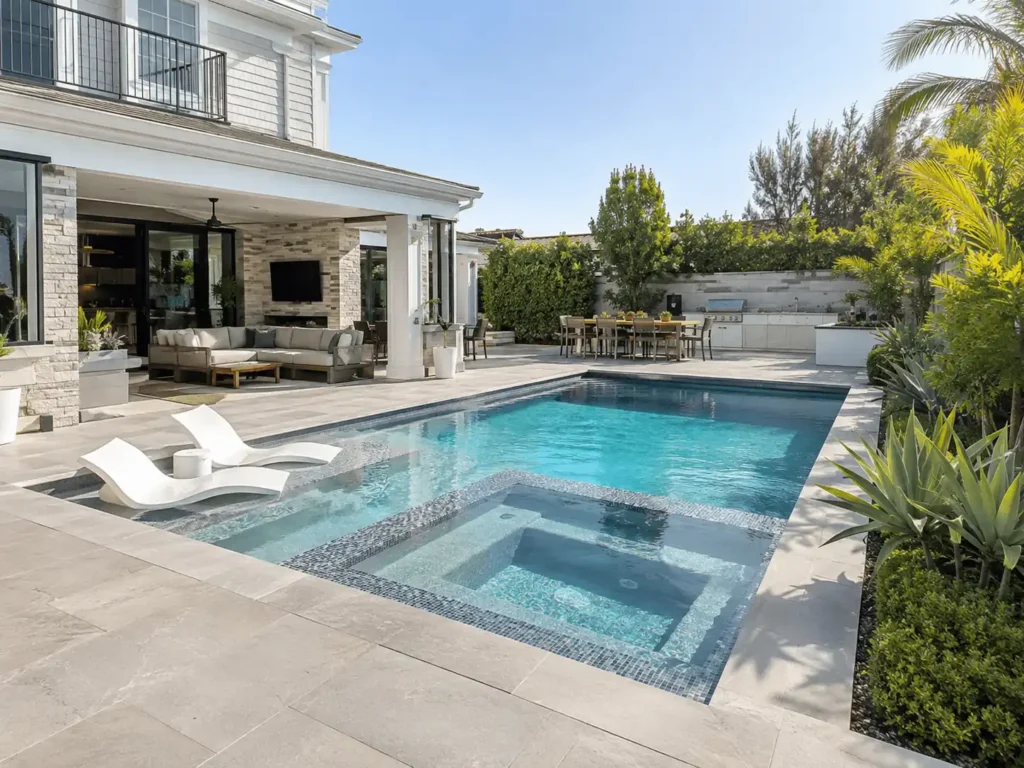
Pattern changes the way a surface reads. Busy, high-contrast layouts break a small space into visual pieces, while a simple pattern in a consistent tone feels calmer and larger. Smaller pavers can follow curves and tight corners without awkward cuts. Lighter tones also bounce light into the shade of a tall fence and tend to feel cooler underfoot in summer sun.
Narrow Walkways and Fewer Level Changes
Walkways in small yards are usually side-yard paths, so the goal is comfort, not width. Choose a slip-resistant surface and keep it gently graded so water runs off.
Level changes use up space. Every step, ledge, and raised planter edge needs room, and each one is also a tripping hazard. Wherever the grade allows, keep the patio, walkway, and pool deck on one continuous level, and when a change is unavoidable, make it clear and well lit.
Built-In Seating, Planters, and Multi-Use Walls
Built-ins are where small yards gain the most. A seating wall can serve as a bench, a boundary, and a place to set a drink. A low retaining wall can be wide enough to sit on and include an integrated planter, and steps can double as seats or hide storage.
Place seating where it gets shade at the times you will use it, keep it out of main walking routes, and match the patio material so the wall looks like part of the surface. Retaining walls hold soil and often involve engineering and permit requirements, so confirm them with a licensed professional and your city before you build.
Going Vertical Without Crowding the Yard
When the ground is limited, use the vertical dimension. Trellises, climbing plants on a fence, wall-mounted planters, and tall, narrow containers add greenery without taking up floor area. Keep these elements simple, though, since too many can make a small yard feel enclosed and block sunlight or views from inside the house.
Can a Small Yard Fit a Pool?
Often it can. A plunge pool is a compact pool designed for cooling off and relaxing rather than swimming laps, and it can fit in a side yard or courtyard that can’t accommodate a standard layout. GWP Builders’ plunge pools are compact custom pools for smaller Los Angeles lots, built with the same steel-and-gunite quality as larger pools. GWP says they are generally faster and more affordable to build than full-size pools, and offers optional heaters and hydrotherapy jets as well as compact decking and seating integrated into the design.
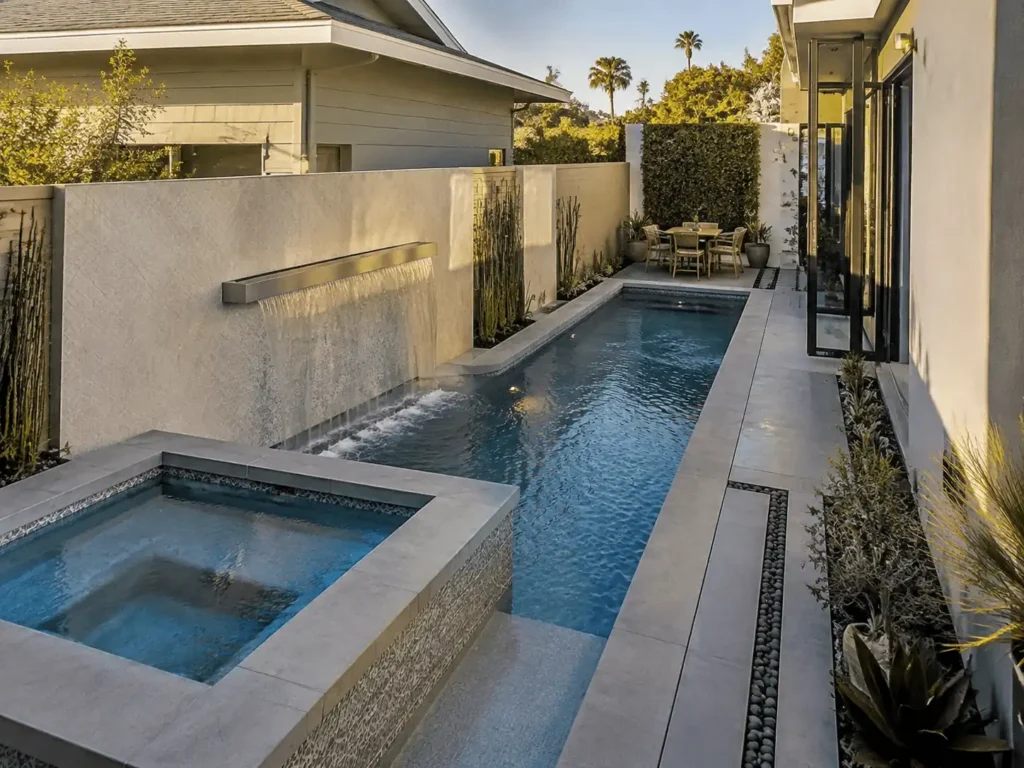
A compact built-in spa can be another way to add water in limited space. Spas and plunge pools both take up area for the water itself plus the deck, equipment, and barrier around them, so plan the whole footprint, not just the basin. GWP’s post on backyard plunge pool designs for small spaces shows more compact layouts.
Surrounding surfaces deserve as much thought as the pool. GWP Builders’ pool deck and hardscape work covers pavers, stone, stamped concrete, and cool-deck coatings, plus slip-resistant finishes and drainage repair, so the deck, coping, and seating can work as one compact system.
Barrier Clearances in Tight Spaces
Safety barriers take real space, and they are easy to overlook in a small yard. The U.S. Consumer Product Safety Commission publishes Safety Barrier Guidelines for Residential Pools that recommend a barrier at least 48 inches above grade, no more than 4 inches of clearance under it, openings too small for a 4-inch sphere, and self-closing, self-latching gates. The guidelines also recommend door alarms where the house forms one side of the barrier, and they treat spas and hot tubs as pools.
These are guidelines, not a mandatory CPSC standard, and local codes govern actual requirements. In a tight yard, they affect where the pool can sit, how close seating and planters can be to the barrier, and whether climbable objects like furniture or planter walls end up next to it. Confirm the rules for your property with your city and your contractor early in the design.
Drainage on a Tight Lot
Small lots leave little room for water to go. Roofs, patios, and walkways can all send water toward the same low spot, and runoff can end up against a foundation, a fence, or a neighbor’s property. Every surface should slope so water moves away from the house and pool.
Permeable surfaces can help. The EPA’s overview of permeable pavement explains that these pavements let rain seep through to underlying layers of soil and gravel, reducing runoff, and it includes interlocking pavers among the types. A permeable system requires a specific base and must suit your soil and property, so ask a licensed professional whether it fits your yard.
Planning Construction Access in Tight Spaces
Narrow side yards and gates limit how equipment and materials get in. GWP Builders’ plunge pool page describes tight-access build planning, including staging and equipment planning for narrow access, which is worth asking any contractor about for a small property.
Excavation requires one more step before you dig. Call 811, the free national before-you-dig service. According to 811 California, you must give notice at least two working days before the dig (not counting the date of notification) and no more than 14 calendar days before it. Underground Service Alert of Southern California serves Los Angeles County.
Discuss a Plunge Pool or Compact Hardscape Plan
If you have a small lot, side yard, or courtyard, GWP Builders can discuss a plunge pool or compact patio-and-deck plan that fits your space. GWP Builders is a family-owned pool contractor serving Los Angeles and the San Fernando Valley, and it offers free, detailed, itemized quotes. Call (888) 515-4488 to start the conversation.
Key Points
- Set priorities first; a small yard performs best with one or two clear zones.
- A single material in a consistent tone makes a compact space feel larger.
- Built-in seating, planters, and walls can do several jobs in the same footprint.
- Minimizing steps and level changes saves room and reduces tripping hazards.
- Plan the pool, deck, equipment, and barrier as one footprint, and check local code.
- Confirm drainage, construction access, and 811 notice before work begins.
Frequently Asked Questions
What is the best paving material for a small backyard?
No single material is best, but a single, consistent material in a light or medium tone works well in most small yards. It keeps the space visually unified and tends to stay more comfortable underfoot than dark surfaces. Pavers, stamped concrete, natural stone, and cool-deck coatings can all work depending on budget and style.
Can you fit a pool in a small backyard?
Often, yes, if the pool is sized for the space. A plunge pool is built for smaller lots, side yards, and courtyards, and GWP Builders says these pools are generally faster and more affordable to build than full pools. The pool still needs room for decking, equipment, a barrier, and construction access.
How do you make a small patio look bigger?
Use one consistent material, a simple paver pattern, and as few level changes as possible. Keep furniture proportional to the patio, and avoid cluttering the edges with several small features. Lighter surfaces and a clear sightline across the yard also help.
Do small yards still need a pool barrier?
Yes, a pool or spa generally needs a barrier regardless of yard size, and local codes determine the exact requirements. The CPSC guidelines recommend a barrier at least 48 inches above grade with self-closing, self-latching gates. In a tight space, plan the barrier early so it does not conflict with seating or walkways.
Do I need to call 811 before a small hardscape project?
Yes, any project that involves digging should begin with a call to 811, even in a small yard. In California, notice is required at least two working days before the dig. Your contractor can usually make the request, but confirm it has been made.