
How does a spa spillover work, and what should you plan for?
A spa spillover is a raised spa that overflows into the pool along a leveled edge, creating a waterfall effect. The key design choices are the spillway style, the height difference between spa and pool, the materials on the wall and lip, the equipment that feeds the spa, and the controls that turn the spillover on and off. Safety barriers and approved drain covers apply to spas as well as pools.
A spillover spa is one of the most recognizable features of a custom pool. Warm water rises in a raised spa, reaches the edge, and flows into the pool below in a smooth sheet or a series of streams. It adds sound, movement, and a clear visual link between two parts of the backyard that otherwise feel separate.
A good spillover is more than a pretty edge. Its height, edge detail, tile, equipment, and controls all affect how it looks and how well it works day to day. This article covers the main design ideas, the practical decisions behind them, and the safety points that deserve attention before you finalize a layout.
How a Spa Spillover Works
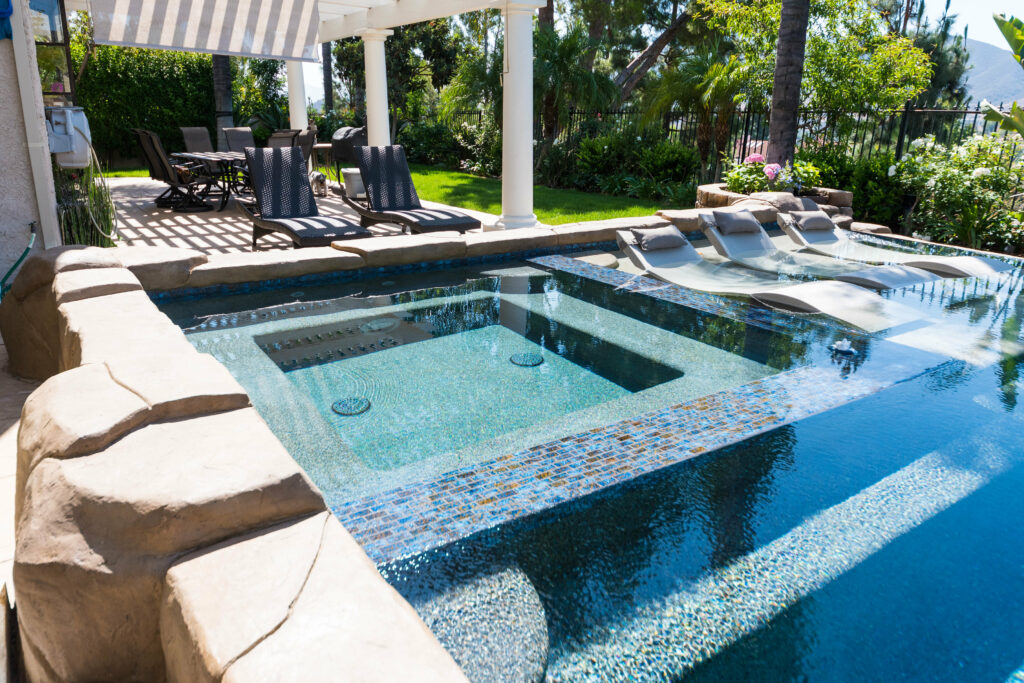
In a spillover design, the spa sits at a higher elevation than the pool and shares a wall with it. Water circulates through the spa, rises to the spillway lip, and runs over the edge into the pool. A pump supplies the flow, and the water returns to the filtration system through the pool.
Most spillover spas are built as part of the pool structure rather than added as a separate tub. GWP Builders Inc. describes its spas and hot tubs as built-in gunite spas that can be attached to the pool, with a raised spa spilling into the pool, or built as a standalone feature. A built-in spa is part of the structure, which is a major difference from a drop-in tub.
Spillway Style Ideas
The edge is where design shows. Several styles are popular, and each creates a different mood.
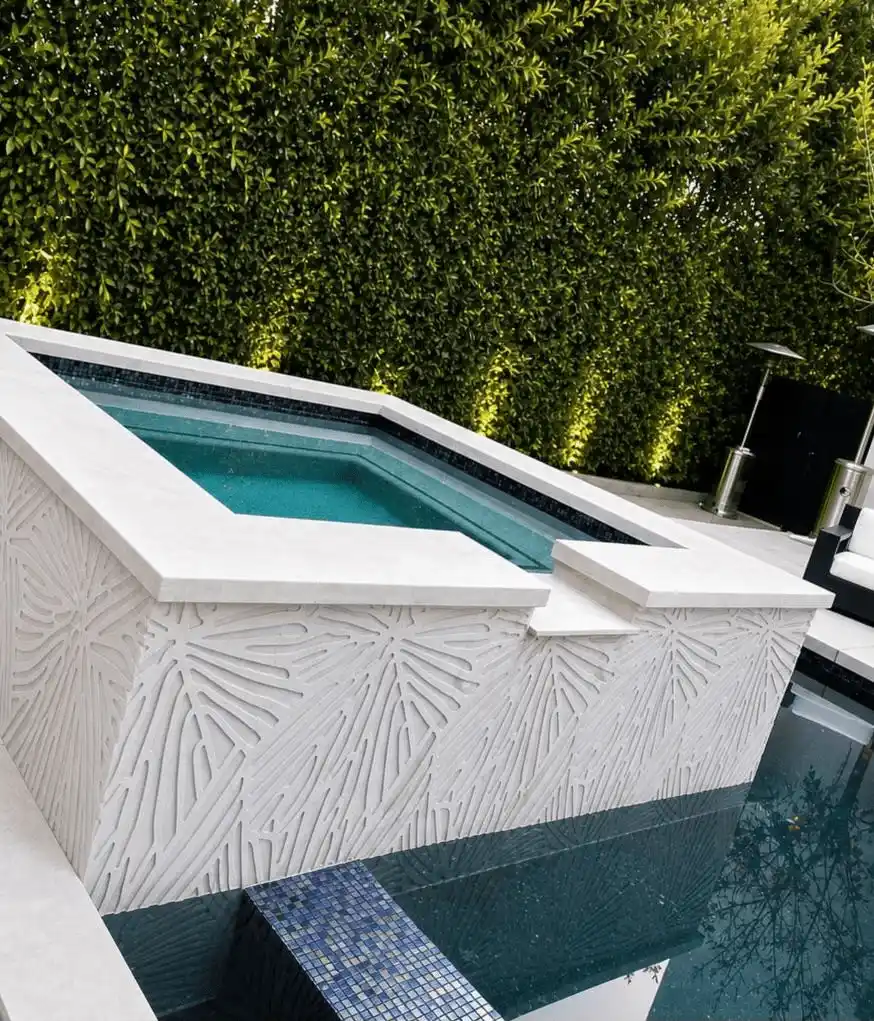
- Sheer sheet. A narrow, level lip produces a thin, glass-like curtain of water. It suits modern and geometric pools and makes a calm, steady sound.
- Multiple scuppers. Individual spouts pour water into the pool in distinct streams. This style adds texture and works well on a tiled or stone-faced wall.
- Rock or stone ledge. Natural stone gives a softer, organic look. It pairs with freeform pools and landscaped yards.
- Stepped or layered edge. The water falls in stages, which breaks up the sound and adds visual depth.
- Glass or tile-faced wall. The wall below the spillway becomes a design element, often finished with glass tile that reflects light.
| Spillway style | Look and sound | Best suited to |
|---|---|---|
| Sheer sheet | Clean, quiet, and modern | Contemporary and geometric pools |
| Scuppers | Rhythmic streams with more splash | Raised walls and tiled faces |
| Rock ledge | Natural and varied | Freeform pools and planted yards |
| Stepped edge | Layered, softer sound | Larger spa walls |
The table is a general guide. The final look also depends on water flow and the height of the drop.
Height, Proportion, and Placement
The height difference between spa and pool controls the sound. A small drop makes a gentle trickle, and a taller drop makes a louder splash and throws more spray. Taller walls look more dramatic but require more planning for seating, steps, and safe entry.
Placement matters just as much as height. Position the spa where you can see it from the house, where it gets some privacy, and where the sun and shade fit how you use it. In Los Angeles and the San Fernando Valley, many homeowners want the spa to be comfortable in cooler evenings and winter months, so wind exposure and afternoon shade are worth studying early. GWP Builders Inc. begins its custom pool design work with the property, sightlines, and how you want to spend time outside, and spa placement is part of shape and depth planning.
Seating, Jets, and Comfort
The spa itself should be comfortable. Ergonomic seating, appropriate depth, and well-placed hydrotherapy jets make the difference between a spa people use and one that sits empty. Consider how many people you want to seat, and whether you want a bench, loungers, or a mix. A heater sized to the spa lets the water reach a comfortable temperature without a long wait.
Equipment, Controls, and Efficiency
A spillover spa usually needs more than a simple pump. Designers consider whether the spa and pool run on shared or separate equipment, how the heater is sized, and how the spillover is switched on and off. Separate control lets you keep the spa warm without running the spillover all night, which saves energy and reduces noise.
Automation ties these functions together so the spa, jets, lighting, and spillover respond to one control panel or phone app. Lighting built into the spa wall adds drama at night, and it is much easier to include during construction than later.
Materials That Work Together
The spa wall, lip, tile, and coping should be chosen together. Waterline tile and the spillway edge take constant wetting and drying, so they need materials that tolerate scale and sun. Natural stone adds warmth but needs sealing and maintenance. Glass tile reflects light but shows scale more clearly. Coordinating tile, coping, and interior finish keeps the pool and spa looking like one design instead of two.
Adding a Spillover to an Existing Pool
A spa can often be added to an existing pool where it is feasible, though it requires a close look at the structure, plumbing, and equipment. A pool remodel is the usual path, because the work involves structural changes, new plumbing and heating tie-ins, and new finishes. GWP Builders Inc. notes that adding a spa during a remodel involves assessing the pool and equipment first.
If you are comparing the idea with a standalone tub, the GWP Builders Inc. guide on the benefits of adding a spa to your pool walks through what changes.
Safety Considerations for Spas and Spillovers
Spas count as part of the pool when it comes to safety. The Consumer Product Safety Commission’s Pool Safely program recommends a fence at least 4 feet high around the entire perimeter of a pool or spa, with self-closing, self-latching gates that open outward, and alarms where the house forms one side of the barrier.
Suction safety matters too. The CPSC explains that the Virginia Graeme Baker Pool and Spa Safety Act requires compliant drain covers on public pools and spas, and a single blockable drain or drains placed less than three feet apart need a secondary anti-entrapment system. Ask your contractor how drain covers and suction outlets are handled in your design, and check local requirements with the City of Los Angeles.
Key Takeaways
- A spillover spa is a raised spa that flows into the pool across a leveled edge.
- Spillway style, drop height, and wall materials shape the look and the sound.
- Plan equipment, heating, lighting, and controls together, ideally before construction.
- Spas can often be added to existing pools through a remodel, subject to feasibility.
- Barriers, drain covers, and local requirements apply to spas as well as pools.
Frequently Asked Questions
What is a spillover spa?
A spillover spa is a raised spa built next to a pool so that spa water overflows along an edge and falls into the pool. It is usually part of the pool structure. The effect is a waterfall that looks and sounds relaxing.
Can I add a spillover spa to an existing pool?
Often yes, though it depends on the pool structure, plumbing, and equipment. A contractor has to assess how the spa will connect and whether the existing equipment can support it. Most additions happen as part of a broader remodel.
Does a spillover spa use a lot of energy?
The pump and heater are the main energy users, and the spillover itself adds pump load only while it runs. Separate controls let you heat the spa without running the spillover constantly. Efficient equipment and automation help control costs.
How high should a spillover spa be?
The height depends on the look and sound you want, and on the layout of the yard. A smaller drop is quieter and a taller drop is more dramatic. Seating, steps, and safe access should guide the final number.
Do spas need a fence or barrier?
Yes, safety guidance treats spas like pools. The CPSC recommends a barrier at least 4 feet high around a pool or spa, and local codes may be stricter. Confirm your project’s requirements with a licensed contractor and local authorities.
Plan Your Spa Spillover With GWP Builders Inc.
If you are imagining a raised spa with a water edge for your new pool or remodel, GWP Builders Inc. can help you compare layouts, edge styles, and equipment for your property. Contact GWP Builders Inc. for a free consultation and a detailed, itemized estimate. Call (888) 515-4488 to get started.