
Does hardscaping actually increase property value in Manhattan Beach?
Yes. Well-built hardscaping around a pool or backyard, such as durable decking, defined patios, and outdoor living areas, is one of the more reliable ways Manhattan Beach homeowners add resale value, since buyers in this market weigh outdoor living space heavily. The return depends on material quality, how well the hardscape integrates with the home’s architecture, and whether it’s built by a licensed contractor to code. GWP Builders designs pool decks and hardscape that hold up to coastal conditions while adding real value.
If you own a home in Manhattan Beach, you already know your backyard is doing double duty. It is where you actually live — morning coffee, weekend barbecues, kids drying off after a swim — and it is also a line item that appraisers, buyers, and real estate agents will scrutinize the moment your property hits the market. In a coastal South Bay market where square footage is scarce and competition for move-in-ready homes is fierce, the hardscape surrounding your pool or backyard living space carries real weight.
We get a lot of calls from Manhattan Beach homeowners asking a version of the same question: will this pay off? It is a fair thing to ask before committing to a deck rebuild, a new patio, or a full outdoor living renovation. The honest answer is that well-executed hardscaping does add value and marketability, but the specifics — materials, layout, scale, and how it integrates with the pool — determine whether that investment actually shows up in a higher sale price or a faster close.
This article walks through what we have learned building pool decks, patios, and outdoor living spaces across the South Bay, including the design decisions that tend to matter most to buyers, realistic cost drivers, mistakes we see homeowners make, and how to think about hardscaping as part of a long-term property strategy rather than a one-off cosmetic project.
Why Hardscaping Matters So Much in Manhattan Beach
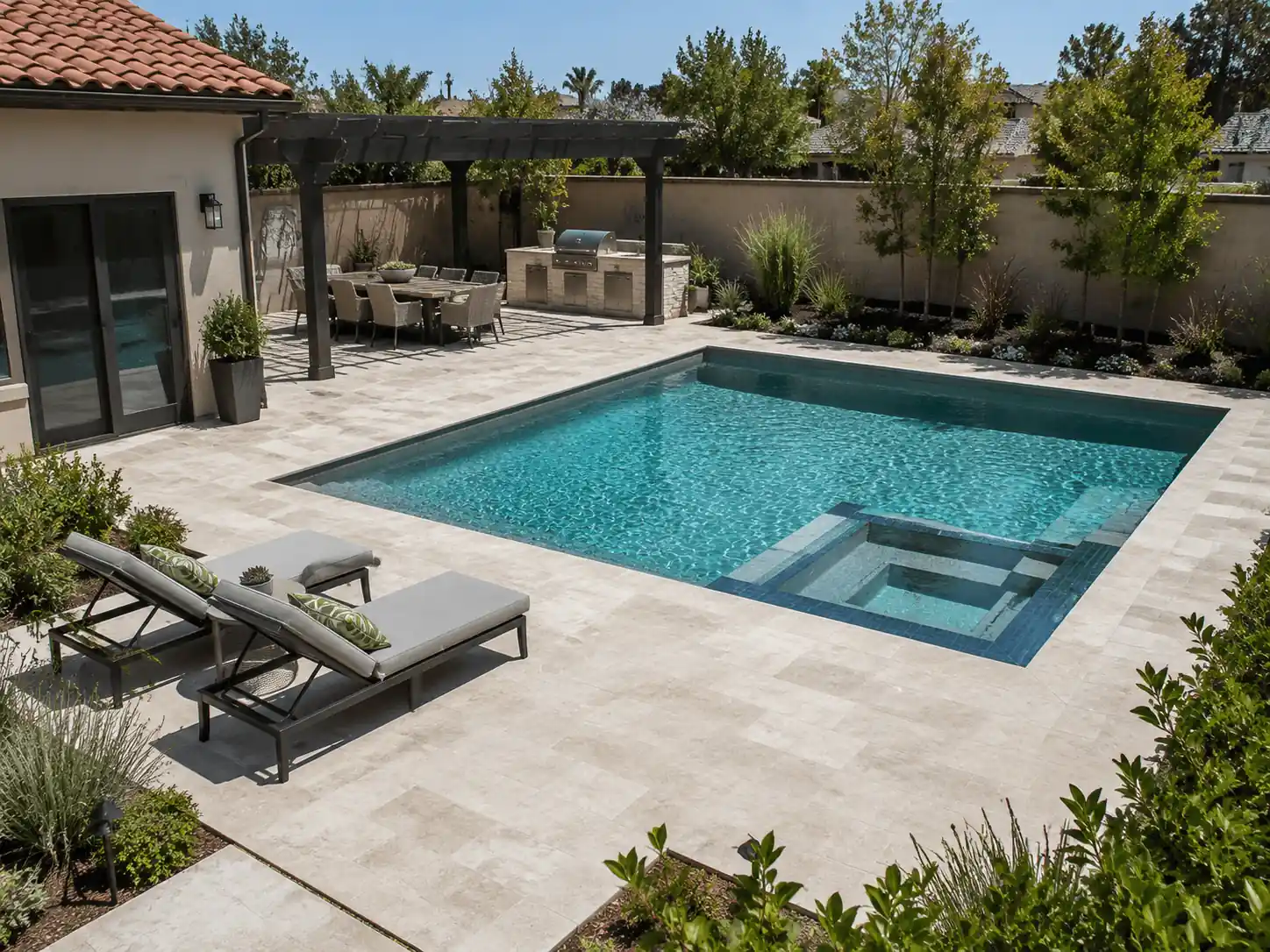
Manhattan Beach lots are tight, and outdoor space is treated like an extension of the living area rather than an afterthought. Buyers here are paying coastal-market prices per square foot, so they expect every part of the property — including the backyard — to feel finished and functional. A pool surrounded by cracked, dated concrete reads as deferred maintenance. A pool framed by clean, well-proportioned decking and a cohesive patio reads as a home that has been cared for.
Real estate agents in this market consistently tell us that outdoor living space is one of the first things buyers photograph mentally when they walk a property. According to National Association of Realtors research on remodeling projects, outdoor improvements are consistently among the categories that recoup a strong share of their cost at resale, and that pattern holds especially true in markets where indoor-outdoor living is part of the lifestyle buyers are paying for.
Design Considerations That Influence Value
Not every hardscape addition adds equal value. A few design principles consistently separate projects that boost marketability from projects that just look nice.
Scale and Proportion
A deck or patio that overwhelms a small lot can actually work against you, making the yard feel cramped rather than spacious. We spend real time during design walking the site and figuring out how much hardscape a given lot can carry before it starts to compete with landscaping and pool space instead of complementing it.
Flow Between Zones
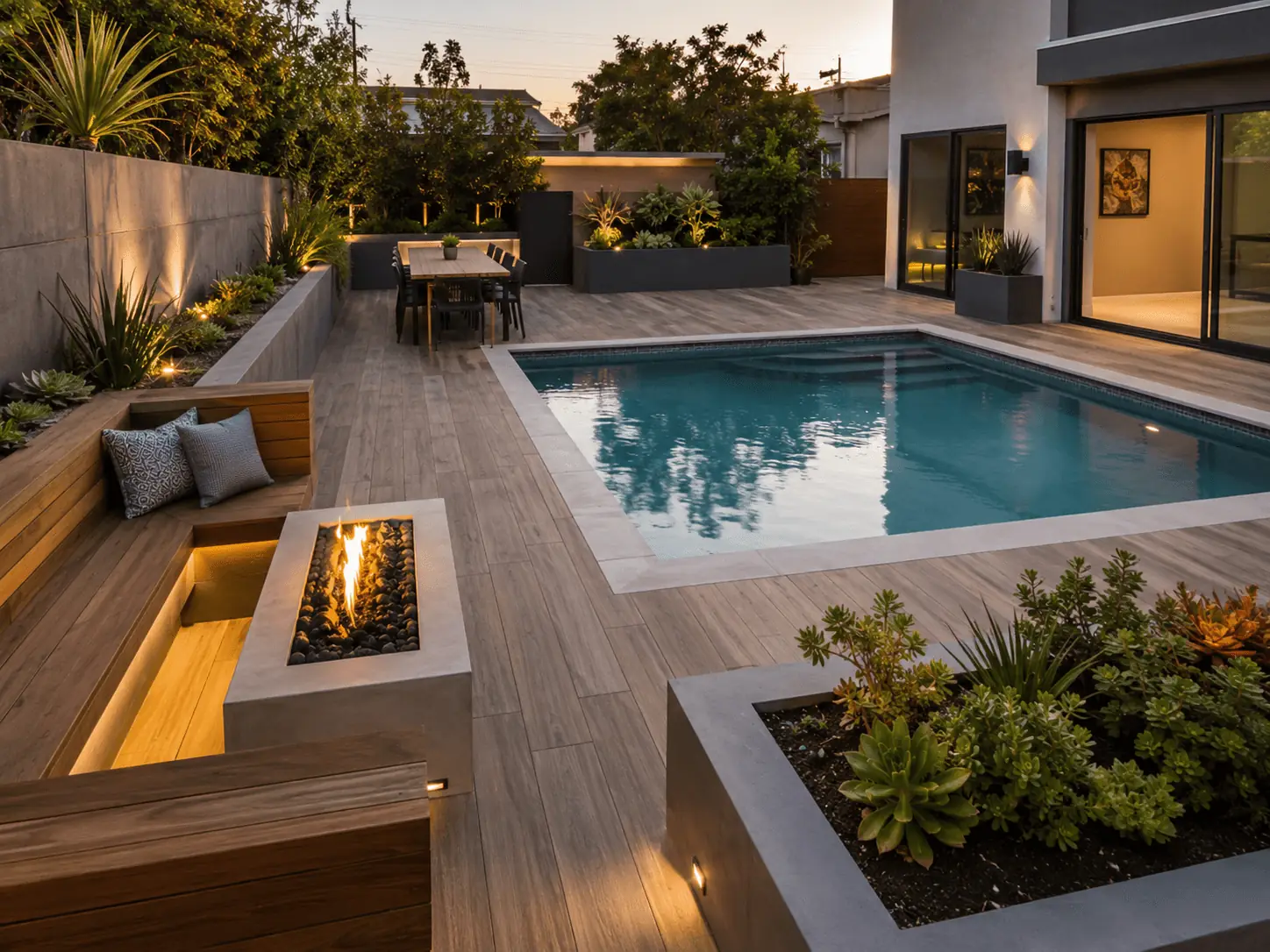
Buyers respond to backyards that feel like a sequence of usable rooms — a dining area, a lounging area near the pool, maybe a fire feature for evenings. When hardscaping creates clear, walkable zones instead of one undifferentiated slab, the whole space photographs and shows better, which matters enormously when a listing goes live.
Material Consistency With the Home
Hardscape that echoes the home’s existing materials — stone tones, stucco color, window trim — reads as intentional. Mismatched materials, even good ones, can make a backyard feel like it was bolted on rather than designed as part of the property.
The Planning Process We Use
Every project starts with understanding how you actually use the space today and how a future buyer might use it. We walk the yard, look at drainage and grade, note where the sun sits at different times of day, and talk through whether the pool itself needs attention as part of the same project. If you are also considering updates to the pool shell, our team can fold in work like pool resurfacing and replastering or pool tile and coping so the deck and the pool finish get addressed together rather than in separate, disconnected phases.
From there we produce a design that accounts for the site’s specific constraints — property line setbacks, existing utilities, slope — before a single piece of material is ordered. Because we run one crew and one project manager per job, homeowners get a single point of contact through design, permitting, and construction instead of being handed off between subcontractors.
Material Options Worth Considering
Material choice affects both upfront cost and long-term durability, which together shape how the investment holds up when it is time to sell.
- Travertine and natural stone: A premium look that coastal buyers tend to recognize and respond to; it stays relatively cool underfoot, which matters in direct sun.
- Porcelain pavers: Increasingly popular for their durability and wood-look or stone-look finishes that resist fading and staining better than some natural materials.
- Stamped and textured concrete: A more budget-conscious option that can still look sharp when detailing and color are handled well.
- Pavers with permeable joints: Useful where drainage is a concern, and increasingly relevant given California’s attention to water-efficient site design, a theme also reflected in EPA WaterSense guidance on landscape materials.
Cost Factors Homeowners Should Understand
Hardscaping cost is driven by square footage, material selection, site prep, and how much grading or drainage work the lot requires. Coastal lots in Manhattan Beach sometimes need additional site prep because of soil conditions or tight access for equipment, which can add to labor time compared with a flatter, more open lot. Built-in features like a fire pit, seat walls, or an outdoor kitchen add cost but also tend to be the elements buyers remember most when touring a home.
We always recommend getting a detailed, written proposal rather than comparing verbal ballpark numbers between contractors, since scope differences account for most of the variation homeowners see between bids. If budget is a factor in timing the project, financing through our partner Lyon Financial, with fixed rates and terms up to 30 years, is worth a conversation before you scale back scope. You can review the financing options we offer directly.
Common Mistakes We See
The most frequent misstep is treating the deck as separate from the pool instead of one connected project. Redoing decking without addressing an aging pool shell or outdated tile line can leave a backyard feeling half-renovated. Another common mistake is under-scoping drainage, which shows up later as cracking, pooling water, or plant damage along the hardscape edges.
We also see homeowners choose trendy materials without considering long-term maintenance or how the look will read to a buyer in five or ten years. Classic, well-proportioned materials tend to hold their appeal better than whatever is most fashionable in a given year.
Professional Recommendations
Our recommendation for Manhattan Beach homeowners thinking about resale is to treat the pool and its surrounding hardscape as one project whenever possible. If your pool design itself feels dated, it is worth discussing options like pool remodeling or even a completely reimagined layout through custom pool design alongside the hardscape work. A coordinated project generally reads as more cohesive to buyers than a series of piecemeal updates completed over several years.
Work only with a licensed contractor. In California, that means verifying C-53 licensing through the Contractors State License Board, which protects you from liability issues and ensures the work meets code. GWP Builders holds an active C-53 Swimming Pool Specialty license, CSLB #974163.
Long-Term Benefits Beyond Resale
Even homeowners with no near-term plans to sell benefit from thoughtful hardscaping. Durable materials mean fewer repairs down the line, and a well-designed layout tends to get used more — which is really the point of the investment in the first place. Quality hardscape also protects the pool itself, since properly graded decking directs water away from the shell and equipment pad instead of toward it.
Maintenance Considerations
Every material has different upkeep needs. Natural stone may need periodic sealing depending on porosity. Porcelain pavers are largely low-maintenance and resist staining well. Concrete surfaces benefit from resealing every few years to keep their finish looking fresh. We walk every client through the specific maintenance schedule for their chosen material at the end of a project, and our team remains available for questions long after installation, consistent with how we handle ongoing pool maintenance and cleaning for clients.
Frequently Asked Questions
Does hardscaping really increase home value in Manhattan Beach?
Well-designed, quality hardscape generally improves marketability and can support a higher perceived value, particularly in a coastal market where outdoor living space is part of what buyers are paying for. The return depends heavily on execution, material quality, and how well the hardscape integrates with the pool and home.
How long does a typical hardscape project take?
Timelines vary with scope, but a deck or patio renovation connected to an existing pool typically runs several weeks once permits are approved, with larger projects that include structural or drainage work taking longer.
Do I need a permit for pool deck or patio work in Los Angeles County?
Most hardscape projects of meaningful size require permits, particularly when they involve grading, drainage changes, or structures like fire features. Requirements are outlined by LA County Building and Safety, and our team handles the permitting process as part of your project.
What is the most durable material for a coastal backyard?
Porcelain pavers and dense natural stones tend to hold up well against sun exposure and salt air common near the coast. The right choice also depends on your budget and the look you want.
Should I renovate the pool and the deck at the same time?
In most cases, yes. Coordinating pool and hardscape work avoids redoing finished areas twice and typically results in a more cohesive final look, which matters both for daily enjoyment and future resale.
How much maintenance does hardscaping require?
It depends on material. Porcelain requires very little upkeep, natural stone may need occasional sealing, and concrete benefits from periodic resealing. We provide maintenance guidance specific to your materials at project completion.
Can hardscaping help with drainage issues around my pool?
Yes. Properly graded and sloped hardscape is one of the most effective ways to direct water away from the pool shell, equipment, and home foundation, which helps prevent longer-term damage.
Let’s Talk About Your Backyard
If you are weighing a hardscape project in Manhattan Beach, whether it is a full deck rebuild, a new patio, or a project connected to a pool remodel, our team is happy to walk your property and talk through realistic options. Reach us at (888) 515-4488 or visit our contact page to schedule a free consultation with no pressure to commit.