
Should I choose a plunge pool or a traditional pool?
Choose a plunge pool if your yard is small, you mainly want to cool off, soak or lounge, and you want lower running costs. Choose a traditional pool if you want room for laps, play and larger groups and have the space and budget. Plunge pools use less excavation, concrete and equipment, but finishes, depth and added features still drive the final cost.
Not every backyard in Los Angeles County has room for a full-size traditional pool, and not every homeowner wants or needs one. Between compact lots in Studio City and Valley Village, narrow side yards across the Valley, and budgets that need to stretch further than they used to, a lot of people considering a pool are now weighing a plunge pool against a traditional pool rather than assuming a traditional pool is the only option.
Both are legitimate choices, and neither is objectively better. The right one depends on your lot size, your budget, how you actually plan to use the water, and how much ongoing maintenance you want to take on. This guide walks through a fair, side-by-side comparison so you can make that call with real information instead of guesswork.
We’ll cover space requirements, design options, cost differences, permitting, and maintenance for both, along with common mistakes homeowners make when choosing between the two.
What Is a Plunge Pool, and How Is It Different?
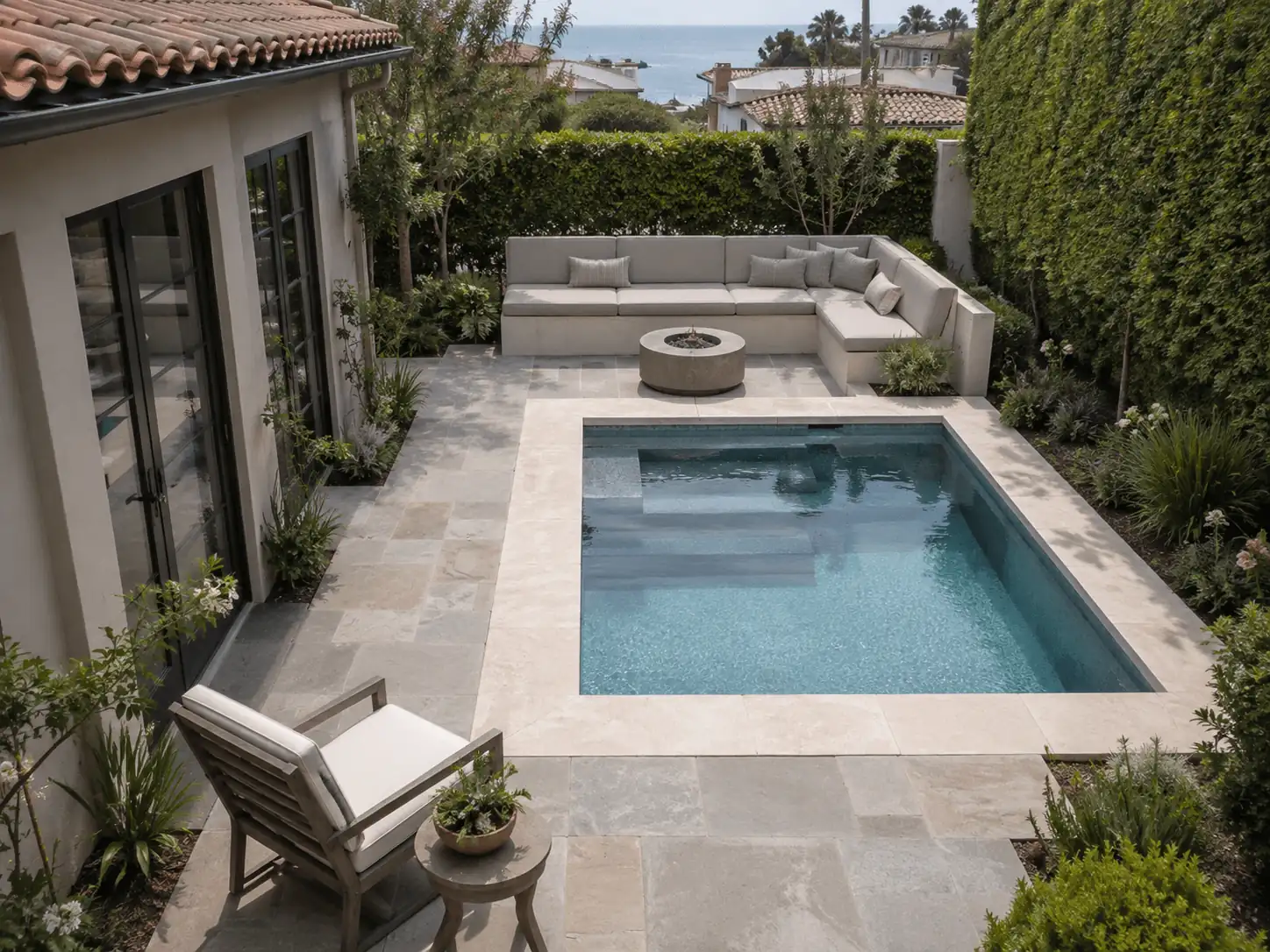
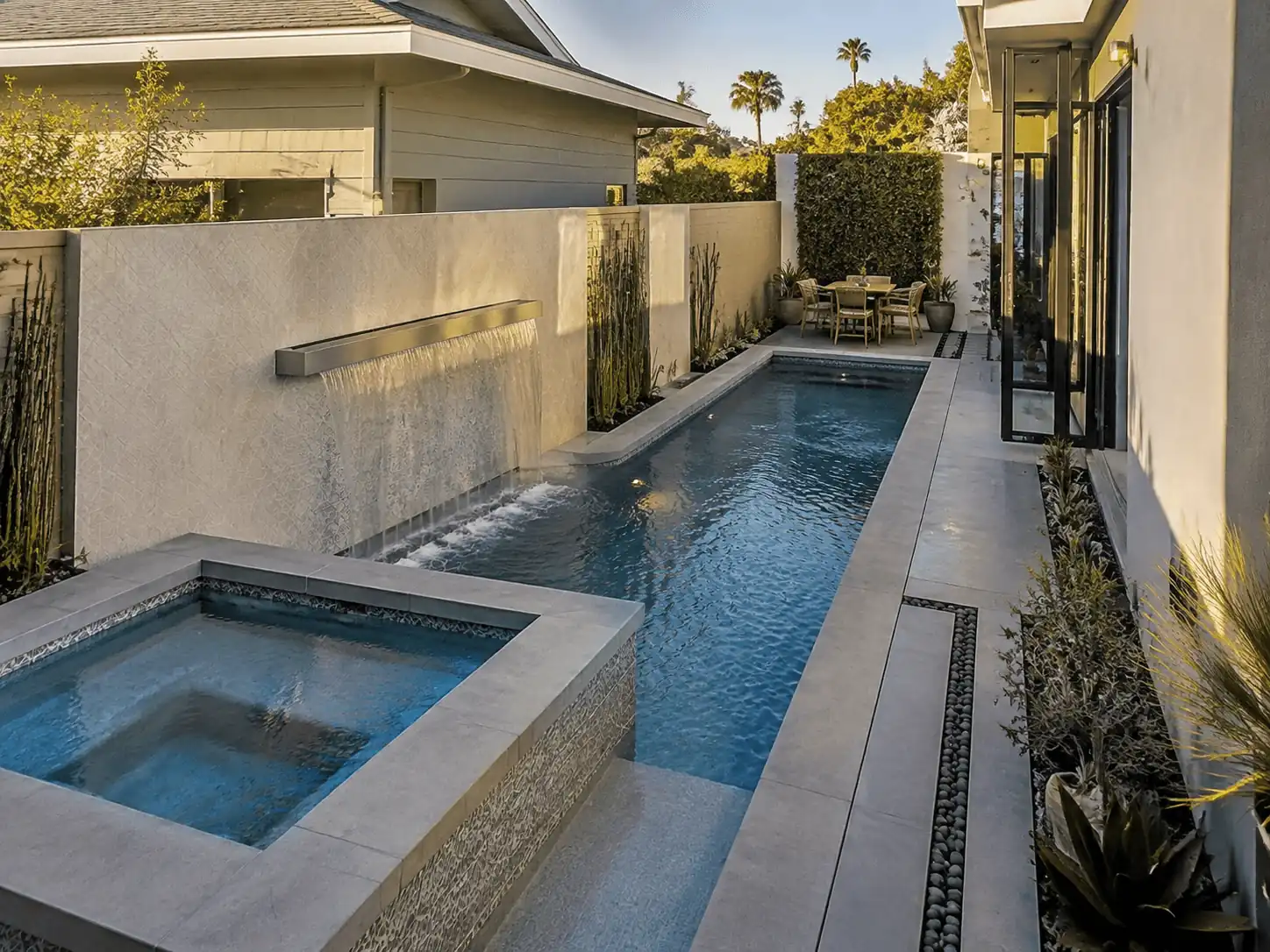
A plunge pool is a smaller, deeper pool typically built for cooling off, soaking, or light exercise rather than laps or large gatherings. Most plunge pools run somewhere in the range of 10 to 20 feet long, though there’s no strict rule, and many are built into a raised wall or set into a courtyard, side yard, or narrow strip along the house.
A traditional pool, by comparison, is built for swimming laps, group entertaining, and typically includes a shallow and deep end. It needs more square footage, more excavation, and more equipment capacity to circulate a larger volume of water.
Lot Size and Space Requirements
This is usually the deciding factor before cost even enters the conversation. A plunge pool can often fit in a side yard, a small courtyard, or a backyard that’s mostly taken up by a patio, deck, or landscaping, sometimes in spaces as narrow as six to eight feet wide.
A traditional pool generally needs a more generous footprint to feel proportional and to leave room for decking, setback requirements from property lines and structures, and equipment placement. If your lot is under roughly 1,000 to 1,500 square feet of usable yard, a plunge pool is often the more realistic option without the yard feeling entirely consumed by water.
Design and Style Options
Plunge Pool Design Options
Plunge pools are often built with a more architectural, intentional look, since they function almost like a water feature as much as a pool. Raised walls, integrated bench seating, a sheeting waterfall edge, or a built-in spa jet system are common additions. Many homeowners pair a plunge pool with a spa to get both cold-plunge and warm-soak functionality in a single footprint.
Traditional Pool Design Options
Traditional pools offer more room to work with in terms of shape, whether that’s a freeform design, a geometric layout, an infinity edge for a view lot, or a dedicated lap pool configuration for serious swimmers. If your priority is swimming distance or hosting larger groups in the water at once, a traditional pool gives you more design latitude to make that work.
Cost Comparison
Plunge Pool Costs
Because plunge pools use less concrete, less excavation, and smaller equipment, they typically cost less than a traditional pool of comparable finish quality. That said, cost still depends heavily on depth, wall height if it’s raised, finish materials, and any added spa or water feature, so it’s not automatically a budget option once upgrades are added.
Traditional Pool Costs
Traditional pools cost more overall due to the larger volume of concrete, steel, excavation, and equipment needed to support a bigger body of water. Site access, grading, and added features like a spa, water feature, or automation package affect the final number as much as size does. For either option, our financing partner, Lyon Financial, offers fixed-rate plans with terms up to 30 years for qualifying homeowners, which you can review on our financing page.
Permitting and Construction Timeline
Both plunge pools and traditional pools require permits through your local building and safety department, since both involve excavation, structural engineering, and electrical work for equipment. The permitting process itself doesn’t differ much between the two; a plunge pool isn’t exempt just because it’s smaller.
Where timelines do differ is construction. A plunge pool’s smaller excavation and shorter plumbing runs generally mean fewer weeks on site compared to a traditional pool, though both projects go through the same phases: design, engineering, permitting, excavation, gunite, decking, and finish work. Barrier and fencing requirements outlined by Pool Safely, the federal pool safety campaign, apply to both pool types regardless of size, so don’t assume a smaller pool means fewer safety requirements.
Maintenance and Ongoing Costs
A smaller volume of water generally means less time and fewer chemicals to maintain a plunge pool week to week, which is a real advantage for homeowners who want the lifestyle benefit of a pool without a heavy maintenance routine. Filtration and heating equipment also tend to run more efficiently on a smaller volume.
Traditional pools require a more involved maintenance routine simply because there’s more water to balance and circulate, though the fundamentals, water testing, filter cleaning, and equipment checks, are the same for both. A saltwater system can reduce hands-on chemical handling for either pool type.
Which One Fits How You’ll Actually Use It
If your main goal is cooling off, soaking, light exercise like tethered swimming, or creating a striking focal point in a small space, a plunge pool usually delivers that without asking for more yard than you have. If you’re picturing laps, pool games with kids or grandkids, or hosting groups of people in the water at once, a traditional pool is generally the better fit even if it means a larger investment.

Some homeowners also use a plunge pool as a stepping stone: a smaller water feature now, with an eye toward a future remodel if their yard or needs change. That’s a reasonable way to approach it, as long as the initial design doesn’t box out that possibility.
5 Plunge Pool Design Ideas for Small Backyards
Modern Minimalism
If you prefer sleek, clean lines and a contemporary look, a modern minimalist plunge pool design is the perfect fit. This design typically features a geometric shape, such as a square or rectangular pool, with smooth, polished surfaces. The pool’s exterior can be made of modern materials like concrete or natural stone, giving it a sophisticated and industrial look.
To enhance the minimalist aesthetic, you can add simple landscaping around the pool, such as a stone pathway or a few potted plants. This design focuses on clean, understated beauty and allows your plunge pool to become the centerpiece of your outdoor space without overwhelming it. Whether you want to add a small water feature or an integrated spa, a minimalist plunge pool design can turn your backyard into a modern oasis.
If you’re interested in a minimalist plunge pool design for your backyard, consider reaching out to GWP Builders Inc for expert pool installation services.
Nature-Inspired Retreat
For homeowners who want their plunge pool to blend seamlessly with the natural beauty of their surroundings, a nature-inspired design is a great option. This design often incorporates natural materials, such as wood, stone, and plants, to create a serene and tranquil atmosphere. The pool itself can be surrounded by lush greenery, with cascading waterfalls or small streams adding to the natural vibe.
A pebble finish or a natural stone pool deck can further enhance the earthy feel of this design. You can even incorporate a small, heated spa or hot tub area to make your backyard a complete retreat. A nature-inspired plunge pool design invites relaxation, making it the perfect spot to unwind after a long day. Additionally, this style works well in Los Angeles, where blending modern living with nature is a key part of the city’s charm.
Custom-Shaped Plunge Pool
Who says plunge pools have to be rectangular or circular? A custom-shaped plunge pool can be a creative and fun way to make the most of your small backyard. Whether you want a freeform shape that mimics a natural lagoon or a pool that follows the contours of your space, a custom plunge pool design offers endless possibilities for personalization.
Custom plunge pools can be designed to fit perfectly into unique spaces, such as tight corners, under decks, or along a fence line. You can also incorporate unique features, such as a built-in bench, swim-up bar, or integrated lighting, to make the pool more functional and visually striking. A custom plunge pool adds a personal touch to your outdoor space, giving it a one-of-a-kind appeal.
To create a custom plunge pool that fits your needs, you’ll want to work with experienced pool builders like GWP Builders Inc, who can help design a pool that suits your style and available space.
Plunge Pool with a View
If you’re fortunate enough to have a beautiful view from your backyard, why not make the most of it by designing a plunge pool that takes full advantage of the scenery? A plunge pool with a view can transform your outdoor space into a luxurious retreat, where you can enjoy stunning vistas while lounging in the water.
This design works particularly well for properties with scenic views of the Los Angeles skyline, mountains, or ocean. The pool can be positioned with the view in mind, and features like glass fencing or an infinity edge can further enhance the sense of openness and connection to nature. A pool with a view provides the ultimate in relaxation, offering both privacy and breathtaking surroundings.
Plunge Pool with an Outdoor Lounge
For those who love to entertain or relax outdoors, combining your plunge pool with a dedicated outdoor lounge area can create a true backyard paradise. By adding a stylish seating area, fire pit, or even an outdoor kitchen near your pool, you can maximize the use of your outdoor space. This design encourages socializing, whether you’re hosting a poolside cocktail party or enjoying a quiet evening under the stars.
Consider adding comfortable seating around the pool, such as chaise lounges or outdoor sofas, to create a seamless transition between the pool area and the lounge. Outdoor curtains or bamboo screens can provide privacy while enhancing the atmosphere. An outdoor lounge combined with a plunge pool creates a dynamic outdoor living space that’s perfect for relaxation and entertainment.
At GWP Builders Inc, we specialize in backyard pool construction and can help you create the perfect plunge pool with an outdoor lounge to match your lifestyle.
What to Expect During a Plunge Pool Installation
Initial Consultation and Design
The plunge pool installation process begins with an initial consultation with a pool contractor. During this meeting, the contractor will assess your backyard space and discuss your design preferences. Plunge pools come in various shapes and sizes, so it’s important to consider how the pool will fit into your existing landscape and what features you’d like to include. From there, the contractor will create a custom design tailored to your needs and available space. You can explore more about the design process in our pool development section.
Site Preparation and Excavation
Once you’ve approved the design, the next step is site preparation. Excavation is required to create space for the plunge pool. This phase involves digging out the pool area, and depending on your yard, this may require heavy machinery. The size of the pool and the type of soil in your yard will affect the excavation process. During excavation, the contractor will ensure the area is properly leveled and that utilities, such as drainage and plumbing, are taken into consideration. For an efficient excavation process, it’s best to work with experienced pool contractors.
Installation of Pool Structure
After excavation, the construction of the pool begins. For plunge pools, this often means pouring a concrete shell or installing a pre-fabricated fiberglass shell. The type of material you choose for your plunge pool will affect the installation time and final look. Concrete shells are custom-built and can be shaped into a variety of designs, while fiberglass pools are pre-fabricated and offer a quicker installation process. No matter your choice, the pool structure is built to withstand years of use and provide a durable base for your plunge pool. To learn more about different pool materials, explore our pool construction services.
Plumbing and Electrical Systems
With the pool structure in place, it’s time to install the plumbing and electrical systems. Plumbing is essential for the filtration and circulation system, ensuring the pool stays clean and the water is properly circulated. Additionally, electrical wiring for lighting, heating, and any additional features like jets or fountains will be installed. It’s critical to ensure these systems are installed by professionals to guarantee the safety and functionality of your plunge pool. Our expert team is here to guide you through the setup of your pool’s plumbing and electrical systems with our pool installation services.
Pool Finishes and Surfaces
After the pool shell is complete and the plumbing and electrical systems are in place, the next step is adding the finishing touches. This is where the real transformation happens! The pool surface is coated with the chosen finish, which could include plaster, tile, or pebbles, depending on your design preferences. Each option provides a different aesthetic and feel. Plaster is smooth and classic, tile adds intricate design, and Pebble Tec creates a more natural, textured surface. This step also includes the addition of any water features or decorative elements, bringing the pool to life. Explore your options for pool finishes in our pool remodel section.
Filling the Pool and Final Inspections
Once the finishing is complete, the pool is filled with water, which can take several hours depending on the size of the plunge pool. During this time, the pool’s systems are tested to ensure everything is functioning correctly. This includes checking the filtration system, lighting, and any other equipment installed. Once the pool is filled, a final inspection is conducted to ensure everything meets safety standards and the design specifications. At this point, your plunge pool is almost ready for use! For any adjustments or additional tweaks, our pool remodeling contractor services are available to fine-tune any details.
Common Mistakes When Choosing Between the Two
- Assuming smaller automatically means cheaper: A highly finished plunge pool with a raised wall, tile work, and integrated spa can cost close to a modest traditional pool.
- Skipping the permit process for a “small” pool: Size doesn’t exempt a plunge pool from permitting or safety barrier requirements.
- Underestimating how a traditional pool will dominate a small yard: Once decking and setbacks are accounted for, a traditional pool can leave very little usable yard space left on a compact lot.
- Not verifying contractor licensing: For either pool type, confirm licensing through the CSLB license lookup before signing a contract.
Our Recommendation Based on Your Situation
If your yard is under about 1,000 to 1,500 square feet, or your budget needs to stay tighter, a plunge pool is usually the more practical starting point for the conversation. If you have a larger, more traditional lot and want the pool to be a central gathering space for swimming and entertaining, a traditional pool is likely worth the larger investment.
Either way, the best next step is an on-site consultation, since photos and square footage alone rarely tell the full story of how a pool will actually sit on your property.
See our plunge pool service and typical prices in the pool cost guide.
Frequently Asked Questions
Is a plunge pool cheaper than a traditional pool?
Generally yes, since it uses less concrete, excavation, and equipment capacity, but added features like a raised wall, integrated spa, or premium finishes can narrow that gap significantly.
How small can a backyard be and still fit a pool?
Plunge pools have been built in side yards and courtyards as narrow as six to eight feet wide, depending on setback requirements and access for construction equipment. A site visit is the only reliable way to know what your specific lot allows.
Do plunge pools require the same permits as traditional pools?
Yes. Both require permits through your local building and safety department, along with compliance with safety barrier and fencing requirements, regardless of pool size.
Can a plunge pool double as a spa?
Yes, many plunge pools are built with integrated jets or paired with a separate spa so the same footprint offers both a cool plunge and a warm soak option.
Which one is easier to maintain?
A plunge pool typically requires less time and fewer chemicals due to its smaller water volume, though both pool types need the same basic routine of water testing, filter cleaning, and equipment checks.
Is a plunge pool worth it for exercise, or just relaxation?
Some homeowners add a swim jet or current system to a plunge pool for tethered swimming, which allows for a real workout in a compact footprint. Without that feature, a plunge pool is better suited to soaking and cooling off than lap swimming.
Can I upgrade a plunge pool to a traditional pool later?
Expanding a plunge pool into a full traditional pool later is possible in some cases but is far more involved and costly than building the desired size from the start. If there’s a chance you’ll want a larger pool eventually, it’s worth discussing during initial design.
Planning a project? Planning this for your own pool? See our plunge pool design and construction service (part of new pool construction). We work across the Valley, including Valley Village.
Talk to a Licensed Pool Builder
GWP Builders is a C-53 licensed pool contractor (CSLB #974163) serving Los Angeles and the San Fernando Valley. Call (888) 515-4488 or request a free, itemized quote.