
What should be on a pool renovation checklist?
A pool renovation checklist should start with a structural assessment, then cover the interior finish, waterline tile and coping, equipment (pump, filter, heater), decking, upgrade ideas such as lighting, a spa or automation, a realistic budget, permits and timeline, and choosing a licensed contractor. Planning in this order avoids paying twice for work that has to be redone.
Most homeowners don’t remodel a pool on a whim. Usually it’s cracked coping catching your toe every summer, a plaster finish gone rough and stained, or equipment that keeps breaking down right when you need it most. Once you’ve decided it’s time, the harder question is knowing what actually needs attention and what can wait.
A pool renovation touches more systems than people expect: the shell and finish, tile and coping, decking, plumbing, filtration, and sometimes the entire equipment pad. Skipping a step, or tackling things in the wrong order, tends to cost more in the long run than doing it right the first time. This checklist walks through the full process LA-area homeowners go through when planning a remodel, from the first structural assessment to choosing the contractor who’ll do the work.
We’ve built and remodeled pools across Los Angeles County as a licensed C-53 pool specialty contractor for years, and this is the same framework we use when we walk a homeowner’s property for the first time. Use it to figure out where your own pool stands before you start collecting quotes.
Start with a Structural Assessment
Before anything gets resurfaced or replaced, it’s worth knowing whether the pool’s shell and plumbing are actually sound. A structural assessment looks at cracks in the shell, signs of settling, the condition of the rebar and gunite or shotcrete underneath the finish, and whether the plumbing lines are holding pressure.
This step matters because cosmetic problems and structural problems can look similar from the surface. A hairline crack might be normal curing wear, or it might be a sign of shifting soil that needs to be addressed before you spend money on a new finish. If your pool has been losing water faster than evaporation would explain, a leak detection inspection should happen before anything else on this list.
Evaluate the Interior Finish and Resurfacing Needs
The interior finish is usually the most visible sign a pool needs work: rough plaster, discoloration, stains that won’t scrub out, or exposed aggregate where the surface has worn thin. Most plaster finishes last somewhere in the range of 10 to 15 years before resurfacing makes sense, though water chemistry and maintenance history affect that timeline quite a bit.
When it’s time to resurface, you’ll be choosing between standard plaster, pebble finishes, and quartz aggregate blends, each with a different look, feel, and expected lifespan. Pebble and quartz finishes generally outlast plaster and resist staining better, which is worth factoring in even though they typically cost more upfront. Our pool resurfacing team can evaluate your existing shell and recommend a finish that fits your budget and how long you plan to stay in the home.
Check Tile, Coping, and Waterline Condition
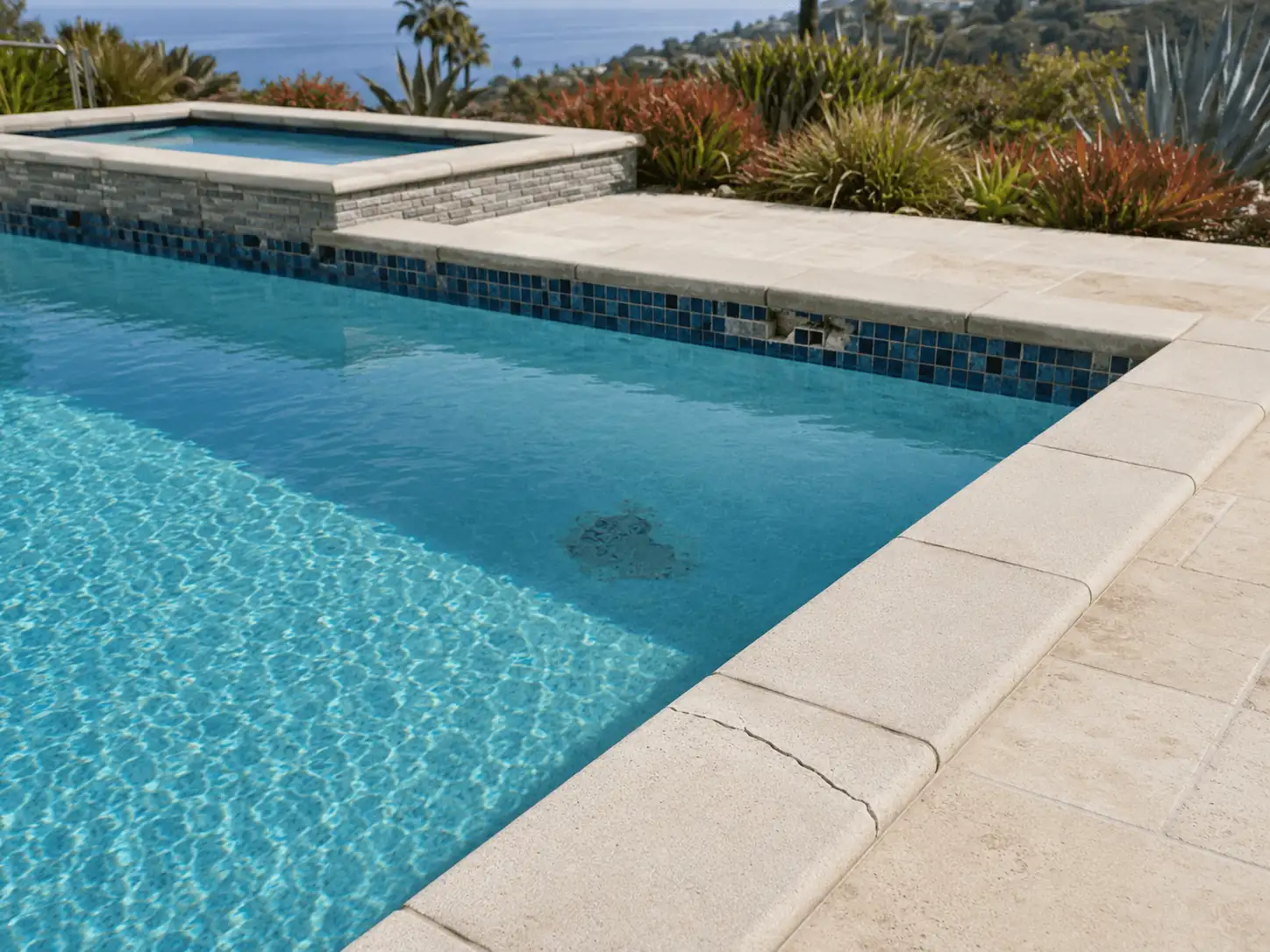
Cracked coping and missing waterline tile aren’t just cosmetic annoyances, they’re often the first visible sign of movement or water intrusion behind the pool’s finish. Coping that’s lifting or spalling should get looked at alongside any resurfacing work, since replacing tile after a new plaster job means redoing work unnecessarily.
This is also the stage where most homeowners rethink the look of their pool. Waterline tile and coping selections have a bigger visual impact than people expect, a darker waterline tile can make the water look deeper, while natural stone coping tends to read as more upscale than standard concrete. Browse tile and coping options early in the planning process, since lead times on specialty tile can affect your overall project schedule.
Assess Equipment: Pumps, Filters, and Heaters
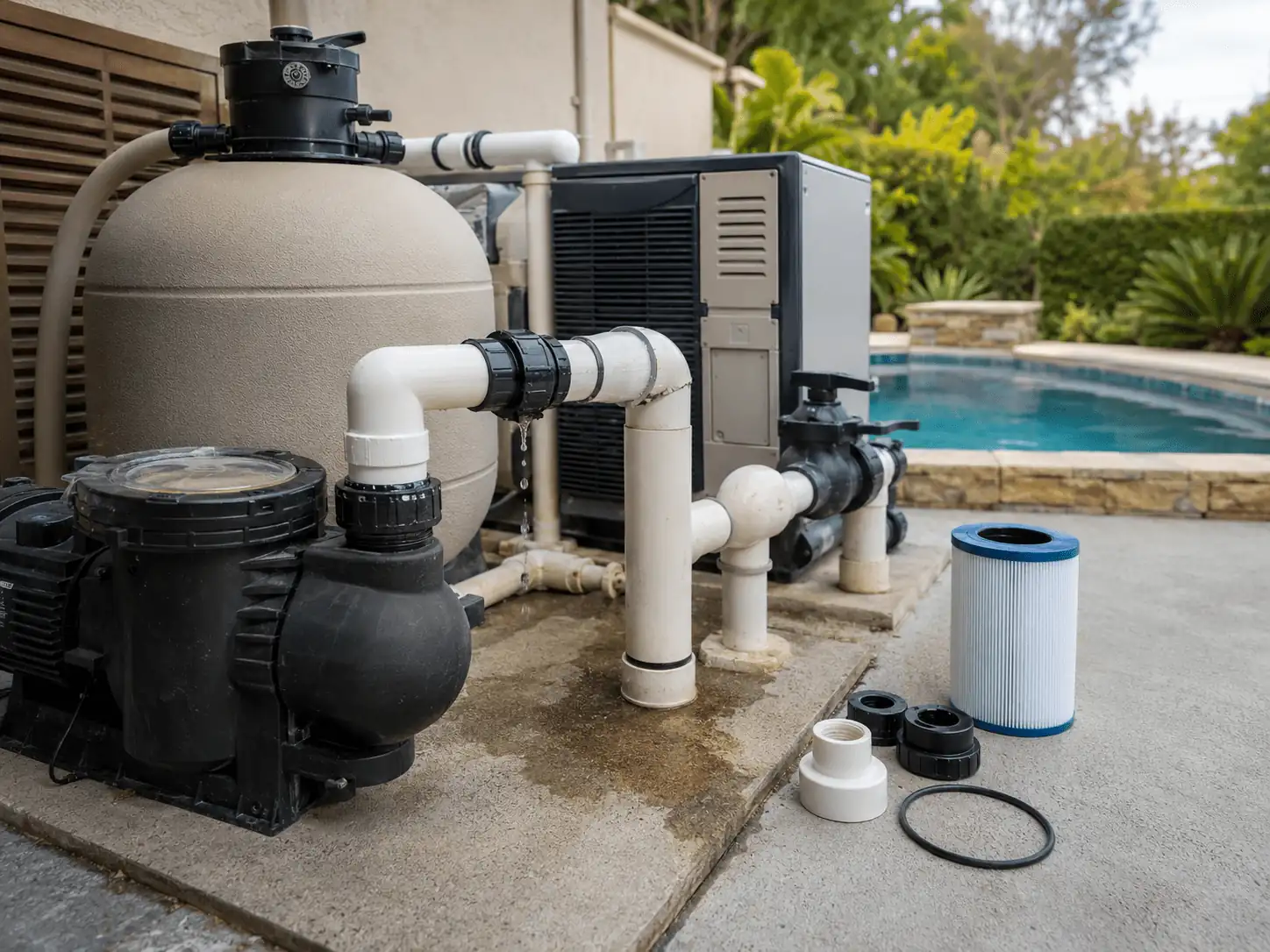
Pool equipment has a shorter lifespan than the shell itself, and a remodel is the ideal time to replace anything nearing the end of its service life rather than waiting for it to fail mid-project. Pumps, filters, and heaters typically last somewhere between 8 and 15 years depending on usage and maintenance, and older equipment tends to run far less efficiently than current models.
Variable-speed pumps and higher-efficiency heaters cost more initially but often pay some of that back through lower energy use over time. The Department of Energy’s guidance on pool equipment efficiency is a useful reference if you want to compare options before committing to a specific setup. If a leaking pipe connection or aging plumbing is part of the problem, address it during this phase rather than after new decking goes in around it.
Plan the Decking and Surrounding Hardscape
Decking takes a beating from sun, pool chemicals, and foot traffic, and it’s common for a deck to need attention around the same time as the shell and finish. Cracked, uneven, or heat-retaining decking is also a safety issue worth addressing rather than living with. Whether you’re refinishing the existing concrete or replacing it with pavers or natural stone, this is a good time to also reconsider the layout, walkways, seating areas, and any raised spa or water feature you might want to add.
Our pool decks and hardscape team typically coordinates this phase with the shell and equipment work so everything is sequenced correctly, rather than pouring a new deck and then having to cut into it later for plumbing access.
Popular Remodel Upgrades Worth Considering
Modernize Pool Lighting
Pool lighting can set the mood for your outdoor space, whether you’re hosting a nighttime gathering or enjoying a quiet evening by the water. Adding LED lights, color-changing lights, or even submerged lighting can completely transform your pool. From accent lighting around the pool’s edge to dramatic underwater lights, there are countless ways to bring a modern, inviting feel to your pool area. Our pool remodel services can help you select the right lighting that suits your style and enhances your pool’s ambiance.
Incorporate Water Features
Water features, like waterfalls, fountains, or deck jets, can add both beauty and tranquility to your pool area. The sound of flowing water can create a peaceful atmosphere, making your pool area feel like a private oasis. If you enjoy the soothing effects of water, consider adding a waterfall feature or a spillover spa. These additions are not only visually appealing but can also increase the value of your home. Explore more on how we can help with custom pool construction and water feature installation.
Add a Spa or Hot Tub
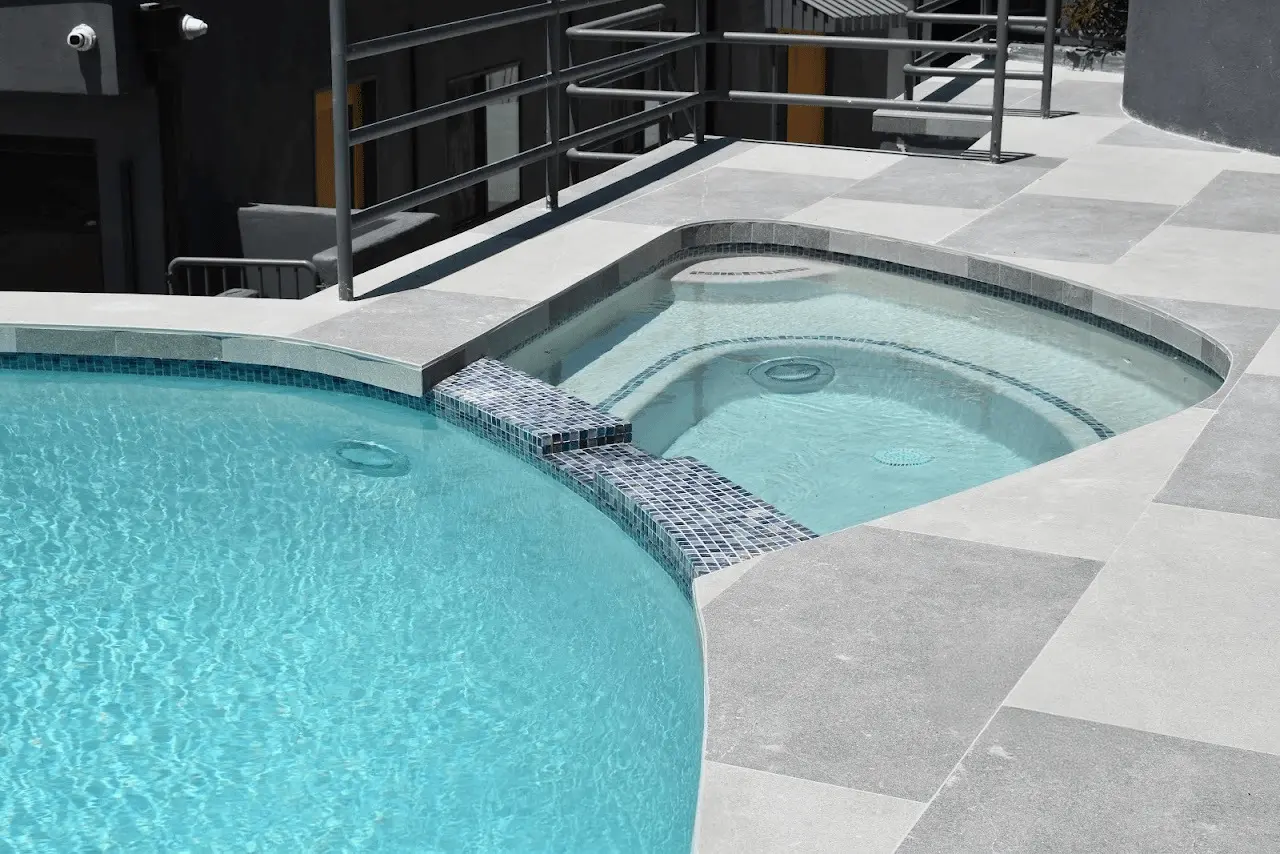
One of the best ways to enhance your pool experience is by adding a spa or hot tub. Whether integrated into the pool or positioned nearby, these features can provide ultimate relaxation and luxury. Imagine having the ability to unwind in warm, bubbling water after a long day. You can even create a seamless flow between the pool and spa for a more cohesive design. If you’re interested in adding a spa or hot tub, our pool remodeling contractor services will ensure a smooth integration with your pool.
Enhance the Pool Shape
If you feel like your pool has become outdated, changing its shape could be a game-changer. You don’t need to build a new pool from scratch to achieve a fresh look. Altering the shape of your pool can significantly improve its functionality and aesthetic appeal. Consider a more modern, freeform design or an elegant rectangular pool. These design changes can make your pool feel more integrated into the overall landscape of your backyard. For expert advice on pool design, visit our pool builders page.
Install Smart Pool Features
With advances in technology, modern pools can be equipped with smart features that make maintenance and control more convenient. For example, automated pool cleaners, remote-controlled pool lights, and temperature control systems can all be integrated into your pool remodel. Imagine adjusting your pool’s settings with your smartphone from anywhere, making pool ownership easier than ever. To learn more about these smart options, visit our pool development page for the latest innovations.
Enhancing Pool Safety Features
Safety is a top priority when it comes to any pool. Many older pools may lack the necessary safety features such as childproof fencing, pool covers, or non-slip surfaces. A pool remodel is the ideal time to address these concerns and add the latest safety features. From installing automatic covers to adding modern pool barriers, safety upgrades are essential for protecting your family and guests. Work with professional pool contractors to ensure that your remodel meets all safety requirements.
The Los Angeles Factor: Why Local Context Changes Everything
Los Angeles pool owners must navigate specific seismic requirements and water conservation standards that differ from other regions. Our pool contractors in Los Angeles design renovations that comply with Title 24 energy standards, ensuring your pumps and heaters are efficient. This local expertise prevents costly permit delays and future compliance fines.
The climate in neighborhoods like Reseda and Van Nuys puts extreme thermal stress on pool materials. Near the intersection of Reseda Blvd and Devonshire St, the temperature fluctuations can cause standard plaster to expand and contract rapidly, leading to premature cracking. We recommend high-performance pebble finishes for homes near the Santa Susana Mountains because they offer superior durability. Our team has observed that pebble finishes last up to 25 years, nearly double the lifespan of traditional white marcite. This longevity is crucial for maintaining a backyard built to last in the San Fernando Valley sun.
💡 Pro Tip: When choosing tile for a renovation in sun-drenched areas like Woodland Hills, opt for glass tiles with a frosted finish. They reflect heat better than dark ceramic, keeping the waterline temperatures lower and reducing calcium buildup.
Set a Realistic Budget
Pool renovation costs vary widely depending on scope, so it helps to think in terms of categories rather than a single number: structural repairs, resurfacing, tile and coping, equipment, decking, and any additions like a spa or water feature. Getting itemized quotes for each category, rather than one lump sum, makes it much easier to see where your money is going and where you have flexibility to phase work over time.
It’s also worth budgeting a contingency for anything hidden that turns up once work begins, older pools especially can have surprises under the surface. For homeowners who’d rather spread the cost out, financing through Lyon Financial offers fixed rates and terms up to 30 years, with loans up to $200,000 for qualified buyers with a 625 or higher FICO score.
Remodeling on a Smaller Budget
Cost-Effective Surface Upgrades
Resurfacing is one of the most impactful ways to modernize a 1970s pool. Updating the finish can brighten the water, smooth rough areas, and prevent leaks. Popular finishes include plaster, aggregate, or a pebble finish, which all provide a fresh look and enhance durability. A resurfacing project can be coordinated alongside a pool construction or remodel project for maximum efficiency.
Updating Pool Edges and Coping
Modernizing coping around the pool edges can drastically change the overall appearance. Replacing dated tile or concrete with travertine, stone, or textured concrete adds sophistication and safety. This upgrade complements backyard pool construction efforts, giving the pool a contemporary edge while improving swimmer comfort.
Maximizing Small Remodel Budgets
Not every modernization requires a complete overhaul. Minor changes like replacing tiles, resurfacing coping, updating pool equipment, and adding simple features can collectively modernize the pool at a reasonable cost. Partnering with skilled pool builders or a pool remodeling contractor helps prioritize changes that deliver the most visual impact for your budget.
Understand Permits and Timeline
Most substantial pool renovations in Los Angeles County require permits, particularly anything involving structural work, equipment upgrades, or electrical changes near the water. A licensed contractor should handle permit drawings and submittals as part of the project, and it’s worth confirming this is included before signing a contract. The California Building Standards Commission maintains the state building code reference that local permitting offices work from.
Timeline expectations matter too. A straightforward resurfacing and tile project might take a couple of weeks, while a full renovation involving structural work, new equipment, and decking can run several weeks to a couple of months depending on permitting and material lead times. Ask for a realistic schedule upfront rather than an optimistic best case.
Common Mistakes to Avoid
The most expensive mistake is sequencing work in the wrong order, installing new decking before addressing plumbing underneath it, or resurfacing before tile and coping repairs are finished. Another common one is choosing a finish or equipment package based purely on upfront price without factoring in longevity and energy costs over the years you’ll own the pool.
Skipping the structural assessment entirely is another mistake we see regularly. A pool that looks fine on the surface can still have shell or plumbing issues that get worse, and more expensive, the longer they’re ignored.
Choosing the Right Contractor
A pool renovation involves enough different trades, structural, plumbing, tile, decking, that coordinating a single licensed contractor who handles it all tends to produce better results than managing several separate crews yourself. Confirm any contractor you’re considering holds an active C-53 Swimming Pool Specialty license, which you can verify directly through the CSLB website, and ask how they handle scheduling between trades.
We work with one crew and one project manager on every job, which keeps communication simple and avoids the finger-pointing that can happen when multiple contractors are involved in the same renovation. It’s also worth checking membership in industry organizations like the Pool & Hot Tub Alliance, which reflects a contractor’s commitment to current construction standards. GWP Builders holds a BBB A+ rating and PHTA membership alongside our C-53 license.
Long-Term Benefits of a Well-Planned Renovation
A renovation that addresses structural issues, updates equipment, and sequences work correctly tends to last far longer than a purely cosmetic refresh. Newer equipment runs more efficiently, which shows up in lower utility bills, and a properly resurfaced shell with solid tile and coping resists the wear that leads to another remodel a few years down the line.
There’s a resale benefit too. A pool that’s been thoughtfully renovated, rather than patched piecemeal over the years, tends to be a stronger selling point, especially for buyers who don’t want to inherit deferred maintenance on day one.
Maintenance After Renovation
A fresh finish and new equipment still need consistent care to hit their expected lifespan. Balanced water chemistry matters more in the first few weeks after resurfacing than at almost any other point, since new plaster is especially sensitive to imbalanced water. Beyond that, routine pool maintenance and cleaning keeps the new surface and equipment performing the way they should.
If your renovation included a switch to saltwater, plan on a slightly different maintenance routine, since salt systems have different chemical balancing needs than traditional chlorine.
For typical prices, see the Los Angeles pool cost guide and our pool remodeling service.
Frequently Asked Questions
How much does a pool renovation typically cost?
Costs vary significantly based on scope, whether you need structural repairs, a full resurface, new equipment, tile and coping, decking, or some combination. We provide an itemized, written estimate after assessing your pool in person so you can see exactly where the budget goes.
How long does a full pool renovation take?
A resurfacing and tile project alone might take one to two weeks, while a comprehensive renovation involving structural work, equipment replacement, and decking can take several weeks to a couple of months depending on permitting and material availability.
Do I need permits for a pool renovation in Los Angeles County?
Most renovations involving structural work, equipment changes, or electrical near the pool require permits. Cosmetic-only work like a straightforward resurface may not, but it depends on scope and your specific jurisdiction. A licensed contractor should handle this determination and the submittal process for you.
How do I know if my pool needs resurfacing or just a repair?
Surface staining, roughness, and minor cracks can sometimes be addressed with a patch or acid wash, but exposed aggregate, widespread cracking, or a finish nearing 10 to 15 years old usually points to full resurfacing. A structural assessment during your initial consultation will tell you which situation you’re in.
Should I upgrade my equipment even if it still works?
If your pump, filter, or heater is more than 10 years old, it’s worth comparing its running cost to a current variable-speed or high-efficiency model. Even functioning older equipment often costs more to run than the price difference of upgrading during a renovation you’re already doing.
What should I look for when choosing a pool renovation contractor?
Verify an active C-53 license through the CSLB, ask whether one crew and project manager handle the whole job, and check reviews and any industry affiliations like PHTA membership. A contractor who can speak clearly about permitting, sequencing, and warranty coverage is generally a good sign.
Can I add features like a spa or water feature during a renovation?
Yes, a renovation is a common time to add a spa or water feature, since the equipment pad and plumbing are already being addressed. Adding these later as a standalone project usually costs more than including them in the original scope.
How much does a pool renovation cost in Los Angeles?
A comprehensive pool remodel in Los Angeles typically ranges from $15,000 to over $50,000 depending on the materials and features. We provide transparent up-front prices that do not increase unless you change your plan, ensuring your budget remains protected throughout the construction process.
Planning a project? Our pool remodeling team works across the San Fernando Valley, including Van Nuys. Call (888) 515-4488 for a free, itemized quote.
Talk to a Licensed Pool Builder
GWP Builders is a C-53 licensed pool contractor (CSLB #974163) serving Los Angeles and the San Fernando Valley. Call (888) 515-4488 or request a free, itemized quote.